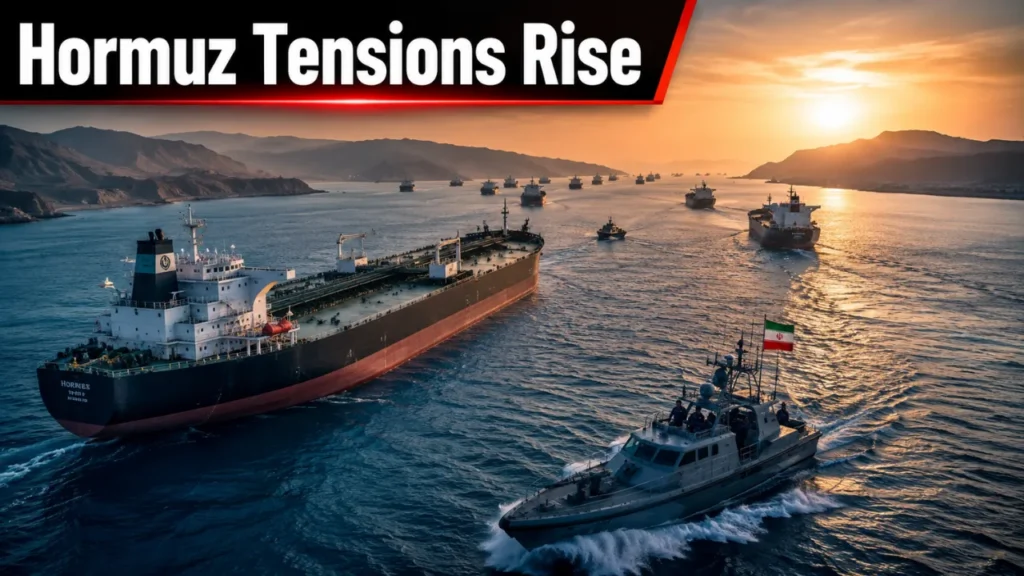
Strait of Hormuz Tensions are once again drawing global attention after Iran increased oversight measures around one of the world’s most important oil shipping corridors. The latest developments have triggered concerns across international energy markets because the narrow waterway handles a major share of global crude oil and liquefied natural gas transportation.
Reports indicate Iranian authorities recently expanded monitoring and operational controls around commercial vessel movement near the strategic maritime route. The situation has intensified geopolitical discussions involving regional security, energy exports, and international shipping stability.
Global analysts now warn that even limited disruptions in the Strait of Hormuz could affect oil prices, shipping insurance costs, and broader economic confidence worldwide.
Google Gmail 5GB Storage Test Sparks Questions About Future Free Accounts
Contents
Strait Of Hormuz Tensions Increase Global Energy Concerns
The Strait of Hormuz remains one of the most strategically important maritime chokepoints in the world.
Located between Iran and Oman, the narrow passage connects the Persian Gulf with the Arabian Sea and international shipping lanes. A large portion of global oil exports moves through the route daily, making regional stability extremely important for energy markets.
According to energy analysts, countries across Asia, Europe, and other regions rely heavily on shipments traveling through the waterway. Because of that, any increase in Strait of Hormuz Tensions immediately attracts worldwide financial and political attention.
Recent reports suggest Iranian authorities strengthened vessel monitoring procedures and expanded security-related oversight measures in nearby waters. However, no full closure of the shipping route has been officially announced.
Shipping companies and global traders are now closely monitoring developments while assessing possible risks connected to regional maritime activity.
Alexandr Wang Rejects Claims Meta AI Team Is Motivated Only By Money
Oil Markets React To Rising Regional Uncertainty
Energy markets historically respond quickly whenever tensions increase near major oil transportation routes.
Following the latest developments, market observers noted growing volatility in crude oil pricing and shipping-related discussions. Some traders reportedly fear that prolonged regional uncertainty could eventually slow transportation operations or increase tanker insurance costs.
Industry experts believe even minor operational disruptions in the Strait of Hormuz may influence:
- Global fuel prices
- Energy supply chains
- Shipping costs
- Inflation pressures
- Import expenses for oil-dependent countries
At the same time, analysts caution against assuming immediate large-scale disruption because commercial shipping continues operating through the region.
Several governments are also maintaining diplomatic engagement aimed at preventing escalation.
Susan Wokoma Joins BBC Thriller Wahala Cast As Anticipation Grows
Why The Strait Of Hormuz Matters To The Global Economy
The importance of the Strait of Hormuz extends far beyond the Middle East.
A significant percentage of global petroleum exports move through the route each day. Major oil-producing countries in the Gulf region depend heavily on the corridor to transport crude oil toward international markets.
Here is why the route remains globally important:
| Key Factor | Importance |
| Global Oil Transport | Major crude exports pass through the route |
| LNG Shipments | Critical for natural gas exports |
| International Trade | Supports worldwide energy supply chains |
| Strategic Position | Connects Gulf producers to global markets |
| Economic Impact | Influences fuel and shipping costs globally |
Because of this importance, geopolitical developments near the waterway often create immediate reactions in financial markets.
Military activity, shipping inspections, or diplomatic disputes in the region usually receive close monitoring from governments and multinational energy companies.
iPhone 18 Pro Max Could Bring Apple’s Biggest Camera Upgrade Ever
International Shipping Companies Remain Alert
Shipping firms operating in the Gulf region continue evaluating operational risks carefully.
Several maritime security groups reportedly advised commercial operators to remain cautious while traveling through sensitive areas connected to the Strait of Hormuz. Industry observers also noted increased attention toward navigation planning and tanker security protocols.
Despite growing Strait of Hormuz Tensions, commercial maritime traffic has not stopped entirely. Tankers and cargo vessels continue moving through the corridor while international authorities monitor regional conditions.
Security analysts believe diplomatic communication remains critical to preventing any broader escalation that could affect global energy transportation.
At the same time, governments worldwide continue preparing contingency strategies in case tensions intensify further.
Energy Markets Could Remain Sensitive In Coming Weeks
Financial experts expect oil and shipping markets to remain highly sensitive over the coming weeks as geopolitical discussions continue.
Any new development involving:
- Shipping inspections
- Military movements
- Diplomatic negotiations
- Export controls
- Maritime security
could quickly influence global commodity prices and investor sentiment.
The current situation also highlights how heavily the modern global economy still depends on stable maritime trade routes.
While no immediate large-scale disruption has been officially confirmed, Strait of Hormuz Tensions continue creating uncertainty across global energy markets and international shipping networks.
Governments, energy companies, and investors are now watching developments closely as the region remains one of the world’s most strategically important geopolitical flashpoints.
Google’s New Magic Pointer Could Reinvent How People Use Laptops Forever