Quick Summary
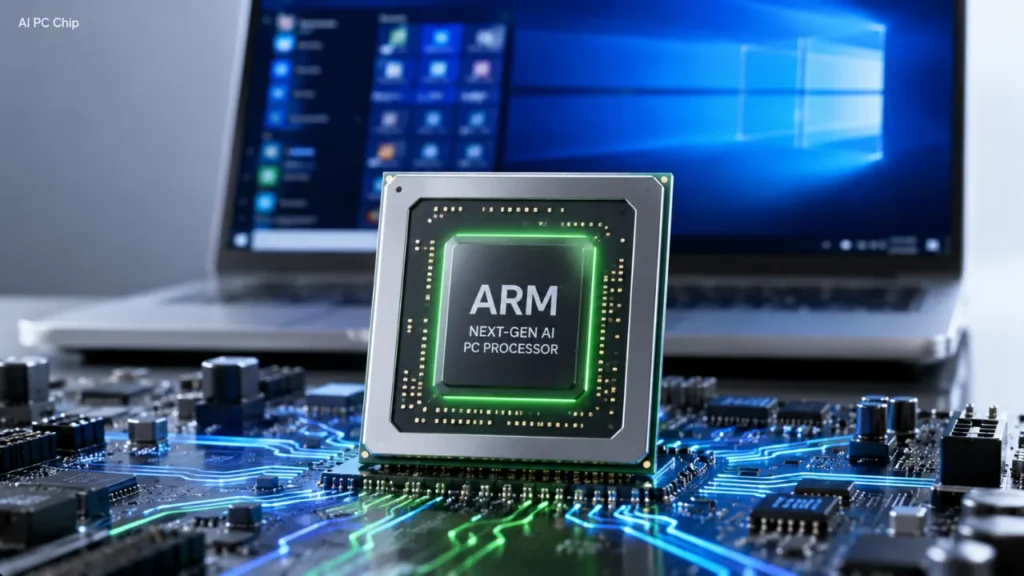
- Nvidia has unveiled the RTX Spark “superchip” for a new generation of AI-focused Windows PCs.
- Microsoft, Dell, HP, Lenovo, ASUS, MSI, and others are preparing systems powered by the new platform.
- The company says these PCs will run AI agents locally using dedicated CPU, GPU, and AI resources.
- Nvidia is targeting what CEO Jensen Huang recently described as a potential $200 billion CPU market.
Nvidia Chips for Windows PCs Mark The Company’s Most Ambitious Expansion Yet
For years, Nvidia dominated conversations around graphics cards and AI accelerators. Now, Nvidia Chips for Windows PCs are becoming the centerpiece of a much larger strategy that could reshape the personal computer market.
At Computex 2026, Nvidia introduced RTX Spark, a new AI-focused processor the company calls a “superchip.” Unlike traditional PC chips designed primarily for productivity or gaming, RTX Spark is built around a future where AI agents perform tasks on behalf of users.
The announcement is significant because Nvidia isn’t simply launching another processor. Instead, it’s attempting to challenge the long-standing dominance of Intel, AMD, and Qualcomm in the Windows PC ecosystem.
Why Nvidia Chips for Windows PCs Matter More Than Another Hardware Launch
Most processor launches focus on performance numbers.
This one is different.
Nvidia’s vision centers on AI agents that can execute tasks, manage workflows, generate content, and interact with software locally on a device. According to the company, RTX Spark-powered systems will include secure sandboxes developed alongside Microsoft, allowing AI agents to operate more safely.
That changes the role of a PC.
Instead of opening multiple applications and manually completing tasks, users may increasingly rely on AI systems that perform those actions automatically.
In simple terms, Nvidia wants PCs to become active assistants rather than passive tools.
Major PC Brands Are Already On Board
One reason this announcement stands out is the number of partners involved.
Nvidia says AI PCs powered by RTX Spark will arrive from:
- Microsoft Surface
- Dell
- HP
- ASUS
- Lenovo
- MSI
- Acer
- Gigabyte
That level of support suggests manufacturers see genuine demand for AI-native computers rather than treating them as experimental products.
Furthermore, Nvidia claims more than 100 software companies have committed support, including Adobe, Blender, Riot Games, ComfyUI, and Xbox.
What Makes RTX Spark Different?
The headline feature isn’t raw gaming performance.
Instead, RTX Spark is designed to run advanced AI models directly on a Windows PC without depending entirely on cloud infrastructure.
RTX Spark Highlights
| Feature | Details |
| AI Performance | Up to 1 Petaflop |
| Local AI Models | Supported |
| AI Agent Support | Yes |
| Secure Sandboxes | Microsoft Collaboration |
| Windows Integration | Full |
| Launch Window | Fall 2026 |
Local AI processing offers several advantages.
Tasks can run faster, sensitive data stays on the device, and users remain less dependent on internet connectivity. Consequently, Nvidia believes AI-powered PCs could become more attractive to professionals, developers, creators, and enterprise customers.
Nvidia Chips for Windows PCs Could Open A $200 Billion Opportunity
The most revealing part of the announcement may not be the hardware itself.
During a recent earnings discussion, Nvidia CEO Jensen Huang argued that CPUs designed for AI represent a potential $200 billion market opportunity.
That statement explains why Nvidia is investing so aggressively beyond GPUs.
The company already dominates AI training infrastructure in data centers. However, billions of PCs remain largely untouched by that success.
If AI agents become mainstream, every personal computer could require significantly more AI processing power than today’s systems provide.
As a result, the desktop and laptop markets could become Nvidia’s next major growth engine.
There’s A History Lesson Here
Nvidia has attempted ARM-based Windows devices before.
More than a decade ago, Microsoft’s Surface RT and other ARM-powered Windows products struggled to gain traction. The ecosystem lacked software support, performance expectations were unclear, and consumers largely ignored the category.
This time, the situation looks very different.
AI has created a compelling reason for consumers to upgrade hardware. Additionally, software developers are actively building AI-powered applications that benefit from stronger local processing capabilities.
In other words, Nvidia isn’t entering the same market it faced in 2013.
What This Means For Consumers
The rise of Nvidia Chips for Windows PCs could lead to a new class of computers optimized for AI workloads rather than traditional productivity alone.
Potential benefits include:
- Faster AI assistants
- Local chatbot processing
- AI-powered content creation
- Improved gaming enhancements
- Better privacy for AI tasks
- Reduced reliance on cloud services
However, several questions remain unanswered.
Manufacturers have not revealed detailed pricing information, and it’s unclear whether these systems will compete with affordable AI-capable devices already entering the market.
Therefore, pricing could become a key factor in determining how quickly consumers adopt the platform.
Final Thoughts
The story behind Nvidia Chips for Windows PCs isn’t really about a processor launch.
It’s about Nvidia’s belief that AI agents will become a standard part of everyday computing.
If that prediction proves correct, the company may have found a path beyond GPUs and data centers into one of the largest technology markets in the world. While questions remain about pricing, adoption, and software readiness, RTX Spark represents Nvidia’s clearest attempt yet to bring the AI revolution directly to consumers’ desktops and laptops.
FAQs
They are Nvidia-powered AI-focused processors and systems designed to run advanced AI workloads and agents locally on Windows devices.
RTX Spark is Nvidia’s new AI-focused processor platform introduced at Computex 2026.
Microsoft, Dell, HP, Lenovo, ASUS, MSI, Acer, and Gigabyte are among the announced partners.
The company believes AI-focused CPUs represent a market worth up to $200 billion.
Nvidia says the first systems are expected to arrive in fall 2026.