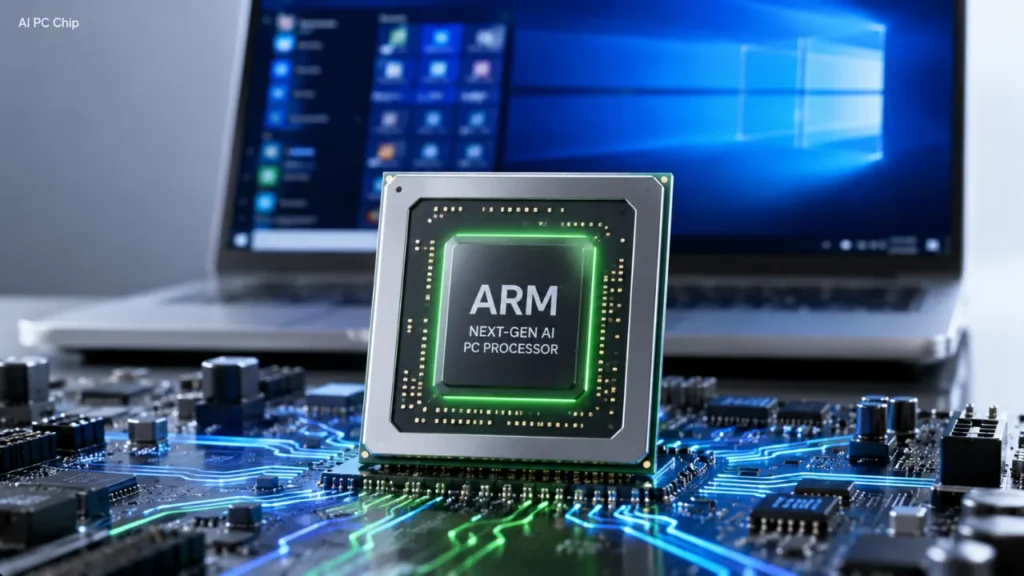
The upcoming Nvidia Arm PC Chip may become one of the most important developments in the Windows ecosystem in years. Ahead of Computex 2026, Nvidia and Microsoft shared identical social media teasers promising “a new era of PC,” fueling speculation that Nvidia’s long-rumored Arm-based N1X platform is finally ready to enter the Windows market.
If the rumors prove accurate, the Nvidia Arm PC Chip could introduce a new class of AI-focused Windows laptops that combine Nvidia’s graphics expertise with Arm efficiency and Microsoft’s growing AI ambitions.
Acer Iconia Duo S14 and S12 Launch With 2.8K OLED Displays And Android 16
Why The Nvidia Arm PC Chip Is Generating So Much Attention
For years, Nvidia has dominated AI hardware in data centers and professional computing. However, the company has never seriously challenged Intel, AMD, or Qualcomm in the Windows laptop processor market.
That could soon change.
The rumored N1X processor is believed to be derived from Nvidia’s GB10 Superchip architecture, which already powers advanced AI development systems. Reports suggest the platform combines Nvidia graphics technology with a powerful Arm-based CPU designed alongside MediaTek.
The timing is particularly important because AI PCs have become one of the biggest technology trends of 2026.
Nvidia Arm PC Chip Could Bring A New Generation Of AI Laptops
Unlike traditional Windows laptops, the Nvidia Arm PC Chip is expected to focus heavily on local AI processing.
Current AI PCs already support features such as:
- AI-powered search
- Live translation
- Image generation
- Meeting summaries
- Productivity assistants
However, Nvidia’s platform could significantly increase available AI computing power.
Expected Advantages
| Feature | Potential Benefit |
| Arm Architecture | Better battery efficiency |
| Nvidia GPU Technology | Stronger AI acceleration |
| Unified Memory Design | Faster AI workloads |
| Windows Integration | Full PC ecosystem support |
| Local AI Processing | Improved privacy and speed |
This combination could allow future laptops to handle larger AI models directly on-device rather than relying heavily on cloud processing.
Microsoft’s Involvement Makes The Announcement More Significant
One reason the teaser attracted so much attention is Microsoft’s participation.
The Windows social media account shared the exact same “new era of PC” message posted by Nvidia. This coordinated marketing effort suggests Microsoft may be preparing Windows optimizations specifically for the Nvidia Arm PC Chip platform.
That matters because software support has traditionally been one of the biggest challenges for Arm-based Windows devices.
Microsoft has spent the last several years improving Windows on Arm compatibility, and Nvidia’s entry could accelerate adoption even further.
What We Know About The Rumored N1X Platform
Although Nvidia has not officially confirmed specifications, industry reports indicate the N1X platform may borrow heavily from the company’s GB10 architecture.
MediaTek Dimensity 7500 Launches With First Arm C1 CPU And Powerful On-Device AI
Rumored Specifications
| Component | Expected Details |
| CPU | Arm-based multi-core design |
| Development Partner | MediaTek |
| Memory | LPDDR5X Unified Memory |
| Focus | AI Computing |
| Platform | Windows on Arm |
| Target Devices | Premium AI Laptops |
The GB10 platform already combines powerful AI capabilities with large memory pools, making it attractive for machine learning and local AI workloads.
How The Nvidia Arm PC Chip Could Challenge Qualcomm
At present, Qualcomm dominates the Windows on Arm market through its Snapdragon X series processors.
The Nvidia Arm PC Chip could create the first major competitor in this segment.
Potential Competitive Advantages
- Strong AI ecosystem
- Advanced Nvidia software stack
- Powerful graphics technology
- Deep enterprise AI expertise
- Strong developer adoption
Additionally, Nvidia’s leadership in artificial intelligence gives it a unique position compared to traditional PC chip manufacturers.
Challenges Still Remain
Despite the excitement, several questions remain unanswered.
Reports suggest systems based on the N1X architecture could initially be expensive because of high-performance components and large memory configurations.
Potential challenges include:
- Premium pricing
- Software optimization
- Battery-life expectations
- Gaming performance
- Manufacturing scale
As a result, Nvidia may initially target professionals, developers, and AI-focused power users before expanding into mainstream laptops.
Why This Matters For Windows Users
The Nvidia Arm PC Chip represents more than just another processor launch.
If Nvidia successfully combines powerful local AI capabilities, efficient Arm architecture, and full Windows compatibility, it could redefine what users expect from future laptops.
Rather than simply competing on CPU speed, future Windows devices may compete on how effectively they run AI workloads directly on the device.
That shift could influence everything from productivity software and content creation tools to gaming, education, and enterprise computing.
Budget AI Laptops 2026 Bring Powerful AI Features Without Premium Prices
FAQ
It is a rumored Nvidia-developed Arm-based processor expected to power future Windows AI laptops.
N1X is the reported name of Nvidia’s upcoming Arm PC platform.
Microsoft and Nvidia shared coordinated teasers ahead of Computex 2026, suggesting a close partnership.
Current reports indicate the platform is expected to support Windows on Arm.
Industry observers expect more details during Computex 2026.