The global tech industry could be heading toward a major shift as OpenAI is reportedly working on an AI-focused smartphone in collaboration with Qualcomm and MediaTek. The move signals a bold entry into consumer hardware, with a strong focus on artificial intelligence at the core of the device.
Early reports suggest this project is not just another smartphone launch, it could redefine how users interact with mobile devices.
Apple App Subscriptions Update: 12-Month Plan with Monthly Payments Explained
OpenAI’s smartphone plans: A new AI-first approach
Unlike traditional smartphones that rely heavily on apps, OpenAI’s upcoming device is expected to center around AI agents. These agents will act as the primary interface, helping users complete tasks without switching between multiple apps.
This represents a significant shift in how smartphones operate. Instead of opening apps manually, users could rely on AI to handle tasks automatically based on context and intent.
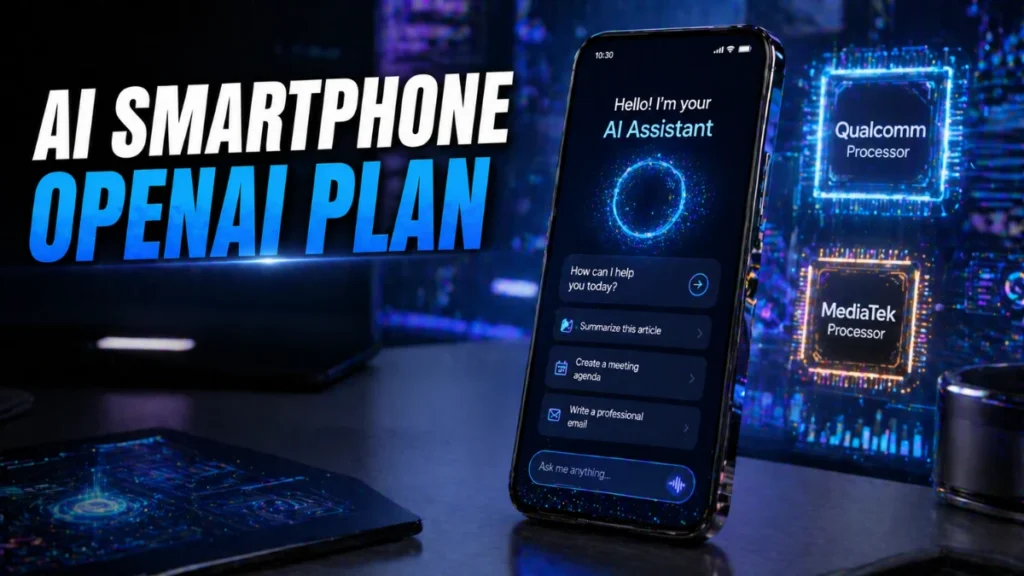
Partnership with Qualcomm and MediaTek
To power this vision, OpenAI is teaming up with two of the world’s biggest chipmakers:
- Qualcomm will contribute its expertise in high-performance mobile processors
- MediaTek will support large-scale chip production and efficiency
The goal is to develop custom processors optimized for AI workloads, enabling faster on-device processing while reducing dependence on cloud computing.
This collaboration highlights the growing importance of specialized hardware in delivering next-generation AI experiences.
Apple Foldable iPhone Leak: ‘iPhone Ultra’ Launch, Design, Price Revealed
Expected launch timeline
The project is still in development, with reports pointing to:
- Mass production target: 2028
- Final specifications expected by 2026–2027
This timeline shows that OpenAI is taking a long-term approach, focusing on building a strong foundation rather than rushing to market.
Manufacturing partner revealed
The device is expected to be manufactured by Luxshare, a company known for assembling major consumer electronics products.
Luxshare will reportedly act as the exclusive system co-design and manufacturing partner, ensuring tight integration between hardware and software.
Potential market impact
If successful, this smartphone could have a major impact on the industry:
- Estimated shipments could reach 300 to 400 million units annually
- It may directly compete with major brands like Apple and Samsung
- Could trigger a new AI-driven smartphone upgrade cycle
The scale of these projections highlights how seriously analysts are taking this development.
Why OpenAI is entering the smartphone market
The strategy behind this move is clear control.
By developing both hardware and software, OpenAI can:
- Deliver a seamless AI experience
- Capture real-time user data for better personalization
- Build an ecosystem around AI agents
Smartphones remain the most widely used personal computing devices, making them an ideal platform for expanding AI capabilities.
Steam Controller Launch Confirmed: Price, Release Date, and Full Features Revealed
Challenges Ahead
Despite the excitement, several challenges remain:
- The project is still based on analyst reports, not official confirmation
- Manufacturing and supply chain risks
- User adoption of AI-first interfaces
- Strong competition from established players
Even with these hurdles, the potential upside remains significant if execution is successful.
Industry Reaction
The news has already impacted the market:
- Qualcomm shares reportedly surged by around 13% in premarket trading following the reports
- Apple shares saw a slight dip amid concerns about future competition
This reaction shows that investors are closely watching how AI could reshape the smartphone industry.
What this means for the future of smartphones
The introduction of an AI-native smartphone could mark the beginning of a new era in mobile computing.
Instead of focusing on faster processors or better cameras alone, future devices may prioritize:
- AI-driven interactions
- Context-aware computing
- Reduced reliance on traditional apps
If OpenAI succeeds, it could push the entire industry toward AI-first design.
Click here to learn more

Anku is a Technology News writer covering Smartphones, AI, software, gaming, laptops, iOS updates, tech trends. He focuses on creating simple, informative, and reader-friendly news in Simple English Language.