Cybersecurity researchers have raised fresh concerns after discovering that Scammers are Abusing an Internal Microsoft Account to distribute spam links and misleading emails. The issue reportedly involves a Microsoft notification email address that attackers are using to send messages that appear legitimate. As a result, many users could mistakenly trust these emails and click harmful links.
According to details, scammers have allegedly exploited a loophole inside Microsoft’s notification system for several months. The incident has now triggered wider discussions about phishing attacks, fake account alerts, and weaknesses in automated email systems.
Oppo Find X9 Ultra And Find X9s Launch In India With 200MP Hasselblad Cameras And 7050mAh Battery
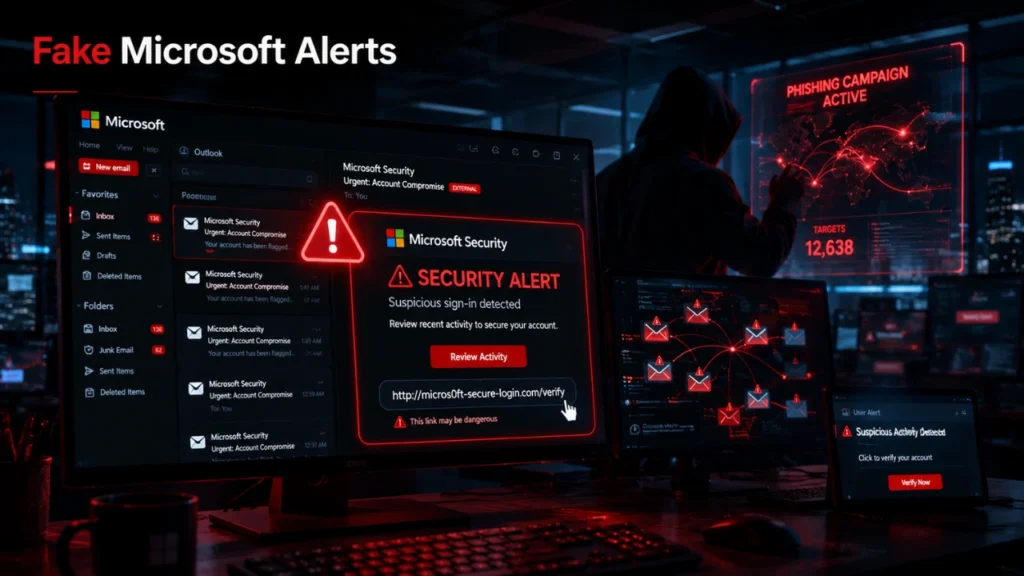
How The Microsoft Email Scam Works
The reported scam uses an internal Microsoft notification email address commonly associated with official account alerts. Normally, Microsoft uses this account to send security notifications, verification codes, and account-related warnings.
However, attackers reportedly found a way to create new Microsoft accounts and abuse that system to distribute spam messages. Consequently, the emails appear more trustworthy because they arrive from a real Microsoft-linked address.
The identified email address as:
- msonlineservicesteam@microsoftonline.com
Because many users recognize Microsoft branding, scammers may successfully trick recipients into opening suspicious links or fake verification pages.
Fake Alerts Are Designed To Look Real
Cybercriminals continue improving phishing techniques, and this campaign appears carefully designed to imitate legitimate account warnings.
Some emails reportedly included:
- Fraud transaction warnings
- Fake account verification notices
- Private message alerts
- Suspicious login claims
Additionally, several subject lines closely resembled genuine Microsoft security alerts. Therefore, unsuspecting users could easily confuse the emails with real account notifications.
How attackers copied Microsoft’s branding and formatting to increase credibility.
Indian-Origin Musk Ally Antonio Gracias Could Gain $90 Billion In Historic SpaceX IPO
Spamhaus Warns About Ongoing Abuse
The Spamhaus Project, a well-known anti-spam organization, also confirmed that Microsoft’s notification system had been abused for months. Furthermore, the organization criticized automated email systems that allow excessive customization inside account notifications.
According to the report, Spamhaus already informed Microsoft about the issue. However, Microsoft had not publicly confirmed a complete fix at the time of publication.
This situation highlights a growing cybersecurity problem where attackers misuse trusted platforms instead of creating fake domains from scratch.
Similar Email Scams Have Increased Recently
The Microsoft case is not an isolated incident. In recent years, hackers have repeatedly targeted legitimate notification systems to spread phishing campaigns.
For example:
| Year | Company | Reported Issue |
| 2023 | Namecheap | Phishing emails sent from official system |
| 2026 | Betterment Platform | Fraud crypto notifications |
| 2026 | Microsoft | Spam links via internal account |
Because users often trust official company emails, these attacks can become highly effective.
OpenAI Smartphone Could Challenge iPhone As Qualcomm And MediaTek Power New Smart Device Push
How Users Can Protect Themselves
Cybersecurity experts recommend checking every email carefully, even if it appears to come from trusted companies.
Users should:
- Avoid clicking unknown links
- Verify account alerts directly on official apps
- Enable two-factor authentication
- Watch for unusual grammar or formatting
- Avoid downloading unknown attachments
Additionally, users should never enter passwords or verification codes through links received in suspicious emails.
Why This Microsoft Spam Issue Matters
The discovery shows how scammers continue evolving phishing strategies by exploiting trusted platforms and automated systems. At the same time, it raises fresh questions about email security protections at major technology companies.
As cyberattacks become more advanced in 2026, experts expect companies to strengthen notification systems and reduce opportunities for abuse. Until then, users should remain cautious while opening account-related emails, even when they appear genuine.
How to Use Google Gemini to Create Music With AI Prompts, Vocals, And Custom Tracks