A monumental 6-3 decision by the U.S. Supreme Court has officially cleared the way for the administration to strip Temporary Protected Status (TPS) from hundreds of thousands of immigrants. For haitians living and working legally in the United States, this ruling marks the beginning of a highly uncertain and frightening chapter.
With search trends heavily focused on the fate of the TPS program, here is a complete breakdown of what the Supreme Court decided, how it immediately impacts communities, and what the Department of Homeland Security is offering moving forward.
Read Also-Kirk Franklin Confronts Heckler Following Canceled Philadelphia Concert
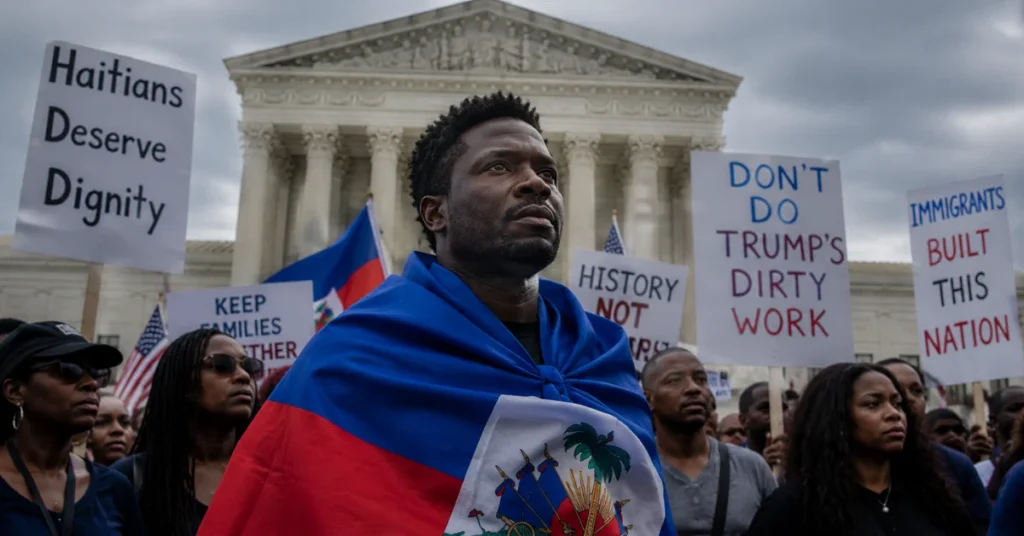
The 6-3 SCOTUS Ruling: Overturning Lower Courts
The legal battle over Temporary Protected Status has been raging for years. Initially, lower federal courts in New York and Washington D.C. had blocked the administration’s attempts to terminate the program. However, Thursday’s conservative-majority ruling authored by Justice Samuel Alito completely overturned those previous decisions.
The Court determined that the executive branch’s decisions concerning the termination of TPS cannot be reviewed by the judicial system. This sweeping decision officially allows the government to end protections for roughly 350,000 haitians and over 6,000 Syrians who had been shielded from deportation due to unsafe conditions in their home countries.
Immediate Impact on the Workforce and Families
The most immediate consequence of the TPS termination is the loss of legal work authorizations. Without valid work permits, hundreds of thousands of people face sudden unemployment, making it nearly impossible to pay rent, afford healthcare, or provide for their families.
The ruling has triggered widespread panic in specific communities, such as Springfield, Ohio, which previously found itself in the national spotlight during the 2024 political campaigns. Community leaders report that many individuals are now terrified of interacting with law enforcement or seeking medical care out of fear of being detained by ICE.
Families are also facing the agonizing possibility of separation. Because many TPS holders have lived in the U.S. for over a decade, they have American-born children who are protected U.S. citizens.
Read Also-Movie The Invite: Olivia Wilde & Edward Norton’s Highly Anticipated New Release
DHS Ultimatum: Permanent Status or Voluntary Departure
In the wake of the Supreme Court decision, the Department of Homeland Security has issued a stark ultimatum. DHS officials publicly stated that the program was always intended to be temporary, with some describing it as a “de facto amnesty”.
Impacted individuals are being told to either find a legal pathway to permanent residency or leave the country. To incentivize self-deportation, the administration is reportedly offering to provide plane tickets back to Haiti, along with a financial assistance package of roughly $2,100 to help individuals re-establish themselves upon return.
However, immigrant advocates argue that returning is virtually impossible, as Haiti is currently plagued by severe infrastructure collapse and widespread gang violence.
Why Are Demographics Trending in Search?
Alongside TPS news, there has been a massive breakout in search interest surrounding the cultural and ethnic background of these communities, specifically queries like “are haitians black” and “are haitians latino.”
For clarity, Haiti is a Caribbean nation that shares the island of Hispaniola with the Dominican Republic. Because of its history of French colonization and the transatlantic slave trade, the vast majority of its population is of African descent. Therefore, they are categorized as Black. Additionally, because their primary languages are Haitian Creole and French not Spanish, they are generally not classified as Hispanic or Latino.
Frequently Asked Questions (FAQs)
In a 6-3 decision, the Supreme Court ruled that the administration has the legal authority to terminate Temporary Protected Status for migrants from Haiti and Syria, overturning lower court injunctions.
The termination of the TPS program will strip legal protections and work authorizations from an estimated 350,000 Haitians living in the United States.
While immediate mass deportations are not scheduled for day one, individuals will lose their legal work permits, placing them at high risk for ICE detention if they remain in the country without a permanent legal status.
Yes. DHS Secretary Markwayne Mullin announced that the administration will provide plane tickets and approximately $2,100 in financial assistance for those who choose to voluntarily depart the U.S..
No. While they are a Caribbean nation, their primary languages are French and Haitian Creole. Because they do not speak Spanish, they are not classified as Hispanic or Latino.
Read Also-New Student Loan Repayment Updates: Massive Changes Take Effect Next Month