Quick Summary
- Microsoft Unveils New AI Models at its Build 2026 developer conference.
- The company introduced MAI-Code-1-Flash, its first proprietary AI coding model.
- Microsoft also launched MAI-Thinking-1, a new reasoning model focused on lower operating costs.
- The move signals Microsoft’s ambition to reduce dependence on third-party AI providers while expanding its own AI ecosystem.
Microsoft Unveils New AI Models To Strengthen Its Position In The AI Race
The announcement that Microsoft Unveils New AI Models may appear to be another product update in an increasingly crowded artificial intelligence market.
However, the strategy behind the launch could have far-reaching implications.
At Build 2026, Microsoft introduced MAI-Code-1-Flash, the company’s first in-house AI coding model, alongside MAI-Thinking-1, a reasoning model designed to deliver strong performance while keeping developer costs under control.
The timing is significant.
For years, Microsoft’s AI success has largely been tied to its partnership with OpenAI. Now, the company appears determined to build a stronger portfolio of proprietary models that can compete directly with offerings from OpenAI, Anthropic, and Google.
Microsoft Surface Laptop Ultra Debuts With NVIDIA Blackwell GPU And 15-Inch Mini-LED Display
Why Microsoft Unveils New AI Models Instead Of Relying Solely On Partners
Microsoft remains one of OpenAI’s biggest investors.
The company has invested billions in OpenAI and has also backed Anthropic while making their models available through Azure.
Yet the economics of artificial intelligence are changing rapidly.
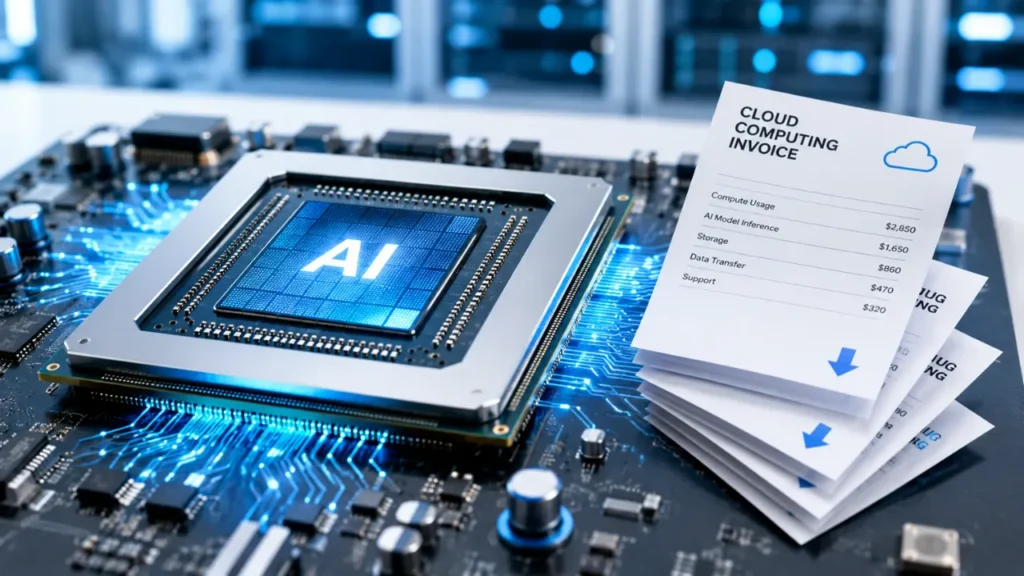
As demand for advanced models grows, operating costs continue to rise. Therefore, owning more of the AI stack could help Microsoft reduce expenses while gaining greater control over product development.
According to the company, proprietary models can run directly on Azure infrastructure without requiring payments to external model providers.
In other words, Microsoft isn’t replacing its AI partnerships. Instead, it is building an alternative path that could improve profitability and flexibility over time.
MAI-Code-1-Flash Targets The Fast-Growing AI Coding Market
One of the biggest announcements was MAI-Code-1-Flash.
The model converts natural language prompts into software code, allowing developers and even non-programmers to build applications using simple text instructions.
The AI coding sector has exploded over the past year as developers increasingly adopt tools that accelerate software creation.
MAI-Code-1-Flash Highlights
| Feature | Details |
| Model Type | AI Coding Model |
| Primary Use | Code Generation |
| Platform Support | GitHub Copilot, VS Code |
| Focus | Fast and efficient inference |
| Target Users | Developers and businesses |
Unlike traditional coding assistants, Microsoft’s focus appears to be on delivering strong performance while reducing computational costs.
That balance could become increasingly important as AI-powered software development becomes mainstream.
Microsoft Unveils New AI Models With A Focus On Lower Costs
Cost efficiency emerged as a recurring theme throughout the announcement.
The newly introduced MAI-Thinking-1 reasoning model was specifically designed to provide strong reasoning capabilities while reducing token-related expenses for developers. Tokens represent the units of information processed by AI models and are one of the biggest drivers of operating costs.
Microsoft Threatens Legal Action Against Security Researcher Over Unpatched Windows Bugs
MAI-Thinking-1 At A Glance
| Feature | Details |
| Model Type | Reasoning AI Model |
| Availability | Private Preview |
| Platform | Microsoft Foundry |
| Key Focus | Efficiency and lower token costs |
| Custom Data Support | Yes |
Additionally, Microsoft says customers will be able to improve model accuracy by integrating their own business data.
That capability could make the platform particularly attractive for enterprise customers looking to deploy specialized AI systems.
The Bigger Story Is Microsoft’s AI Independence
The launch matters because it reveals a broader shift inside Microsoft.
For much of the AI boom, the company benefited from its position as a cloud provider and strategic investor. Now, it wants to compete more directly at the model layer itself.
This approach offers several potential advantages:
- Reduced dependence on external AI providers
- Better control over pricing
- Deeper Azure integration
- Improved margins on AI services
- Stronger competitive positioning against Google and Amazon
Meanwhile, competition continues to intensify.
Google recently expanded its Gemini family, Anthropic is reportedly preparing for a public offering, and OpenAI continues to push into enterprise AI. Consequently, Microsoft faces increasing pressure to differentiate its offerings.
What This Means For Developers
Developers may ultimately benefit the most from the announcement.
As more companies release proprietary models, competition could lead to lower prices, improved performance, and greater choice.
Microsoft’s strategy also aligns closely with tools developers already use daily, including GitHub Copilot and Visual Studio Code. Therefore, adoption barriers may be lower than for completely new platforms.
Furthermore, Microsoft announced updates to speech recognition, synthetic voice generation, image generation, and small AI models capable of running directly on Windows PCs.
Together, these releases suggest Microsoft is building a more comprehensive AI ecosystem rather than focusing on a single flagship model.
Alphabet AI Infrastructure Spending 2026 Hits $80 Billion As Google Doubles Down On AI Future
Final Thoughts
The fact that Microsoft Unveils New AI Models is important not because of the products themselves, but because of what they represent.
Microsoft is evolving from a company that primarily enabled the AI revolution through investments and cloud infrastructure into one that increasingly wants to shape the future of AI directly.
MAI-Code-1-Flash and MAI-Thinking-1 may not immediately dethrone the industry’s leading models. However, they signal a future where Microsoft relies less on partners and more on technology it controls itself.
As AI competition intensifies, that shift could prove just as important as any individual model release.
FAQs
Microsoft introduced MAI-Code-1-Flash and MAI-Thinking-1 at Build 2026.
It is Microsoft’s first proprietary AI coding model designed to generate software code from text prompts.
MAI-Thinking-1 is a reasoning model focused on efficiency and lower token costs.
The company wants greater control over costs, infrastructure, and AI development while reducing reliance on third-party providers.
Microsoft says MAI-Code-1-Flash will be available through GitHub Copilot and Visual Studio Code.