Quick Summary
- Google parent Alphabet plans to raise $80 billion to expand AI infrastructure and computing capacity.
- The fundraising includes public stock offerings, an at-the-market share program, and a $10 billion investment from Berkshire Hathaway.
- Alphabet has also increased its projected 2026 capital spending to as much as $190 billion.
- The move highlights how the AI race is shifting from software innovation to a battle for computing resources.
Alphabet AI Infrastructure Spending 2026 Reaches A Scale Few Expected
The scale of Alphabet AI infrastructure spending 2026 is becoming increasingly difficult to ignore.
Google’s parent company has announced plans to raise up to $80 billion through multiple stock-sale initiatives as it ramps up investments in artificial intelligence infrastructure. The company says demand for its AI products and services is growing faster than its available capacity, forcing it to accelerate spending on data centers, computing power, and supporting infrastructure.
The number itself is staggering. However, the bigger story isn’t how much Alphabet plans to spend. It’s what that spending reveals about the future of artificial intelligence.
For years, technology companies competed by building better software. Today, they’re increasingly competing for access to computing power.
Why Alphabet AI Infrastructure Spending 2026 Matters More Than A Typical Investment Announcement
At first glance, this looks like a corporate fundraising story.
In reality, it may be one of the clearest signals yet that AI demand is outpacing the industry’s ability to supply computing resources.
Alphabet says enterprises and consumers are adopting its AI services at levels exceeding available capacity. As a result, the company plans to significantly expand its foundational infrastructure.
This is a major shift.
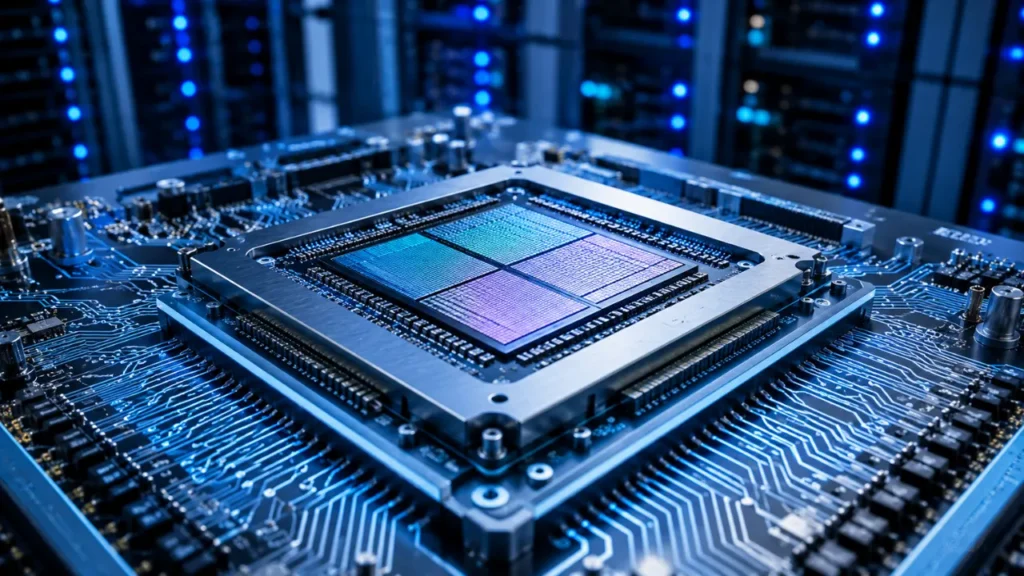
Only a few years ago, AI companies focused primarily on building smarter models. Now, the challenge is ensuring there are enough chips, servers, power sources, networking systems, and data centers to run those models at scale.
In other words, the AI race is becoming an infrastructure race.
Where The $80 Billion Will Come From
Alphabet isn’t relying on a single funding source.
Instead, the company plans a multi-layered fundraising strategy.
Alphabet Funding Breakdown
| Source | Amount |
| Public Stock Offerings | $30 Billion |
| At-The-Market Share Program | $40 Billion |
| Berkshire Hathaway Investment | $10 Billion |
| Total Planned Raise | $80 Billion |
According to company disclosures, Berkshire Hathaway will purchase $10 billion worth of Alphabet shares, further strengthening a position it began building in 2025.
Meanwhile, Goldman Sachs, JPMorgan Chase, and Morgan Stanley are helping manage portions of the fundraising effort.
Alphabet AI Infrastructure Spending 2026 Shows How Expensive AI Has Become
The most revealing detail may not be the fundraising itself.
Alphabet recently increased its projected 2026 capital expenditure forecast to between $180 billion and $190 billion, up from previous estimates. The company also expects spending to rise further in 2027.
Those numbers demonstrate a reality many consumers don’t see.
Modern AI systems require:
- Massive GPU clusters
- Advanced networking equipment
- Specialized AI accelerators
- Huge amounts of electricity
- New data center construction
- Global cloud infrastructure
Every AI-generated answer, image, video, and coding request depends on this hardware foundation.
As AI adoption grows, infrastructure costs grow alongside it.
The Real Battle Is No Longer Chatbots
Many headlines focus on Gemini, ChatGPT, Claude, and other AI assistants.
However, those products are increasingly becoming the visible layer of a much larger competition.
Google CEO Sundar Pichai recently pointed to compute capacity as one of the company’s biggest challenges. The issue isn’t simply creating better AI models. The challenge is ensuring enough infrastructure exists to serve billions of requests.
That’s why Alphabet, Microsoft, Amazon, and Meta are collectively expected to spend more than $700 billion on capital expenditures this year. Some analysts even believe total AI-related spending across the industry could surpass $1 trillion in 2027.
Consequently, access to computing power may become one of the technology sector‘s most valuable assets.
What This Means For Users
Most consumers won’t directly notice an $80 billion fundraising plan.
Nevertheless, they may feel the effects over time.
More infrastructure could help Google:
- Expand Gemini AI capabilities
- Improve AI response speeds
- Support larger context windows
- Deliver more advanced AI tools
- Reduce service bottlenecks
- Expand enterprise AI offerings
As demand increases, companies that invest aggressively in infrastructure will likely have an advantage when launching future AI products.
Therefore, today’s spending decisions could influence what AI experiences look like years from now.
Alphabet’s Momentum Helps Explain The Spending
Alphabet isn’t making these investments from a position of weakness.
The company reported first-quarter revenue of $110 billion, a 22% year-over-year increase. Google Cloud revenue grew 63%, while its backlog expanded to more than $460 billion. Alphabet also says more than 8.5 million developers now build applications using its AI models every month.
Those figures help explain why management appears willing to spend aggressively.
From Alphabet’s perspective, failing to build enough infrastructure may be a greater risk than spending too much.
Final Thoughts
The story behind Alphabet AI infrastructure spending 2026 isn’t really about fundraising.
It’s about the realization that artificial intelligence has entered a new phase.
Winning the AI race no longer depends solely on algorithms and software breakthroughs. Increasingly, success depends on who can build, power, and scale the infrastructure required to support global demand.
Alphabet’s $80 billion plan reflects that reality. Whether the investment ultimately pays off remains uncertain, but one thing is clear: the future of AI will be built as much in data centers as it is in research labs.
FAQs
The company says it wants to expand AI infrastructure and computing capacity to meet growing demand for AI services.
Berkshire Hathaway plans to invest an additional $10 billion in Alphabet shares.
The company expects capital spending to reach between $180 billion and $190 billion.
AI systems depend on large-scale computing resources, including GPUs, servers, networking equipment, and data centers.
Potentially. More infrastructure could support faster AI services, larger models, and improved AI-powered products.