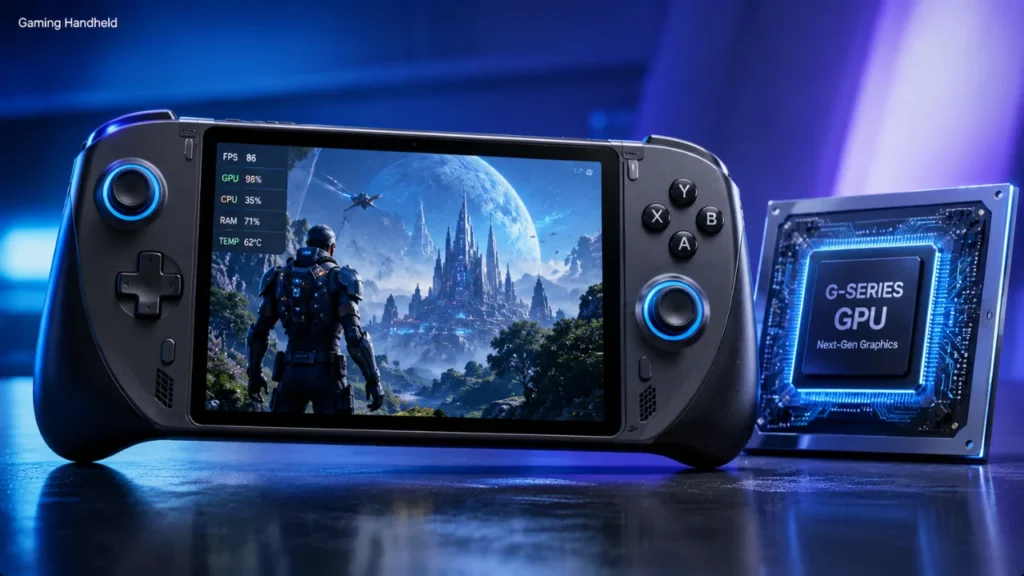
The new Intel Arc G-Series processors have officially arrived, marking Intel’s strongest push yet into the rapidly growing handheld gaming PC market. Designed specifically for portable gaming devices, the new chips aim to challenge AMD’s Ryzen Z-series processors that currently power popular systems such as the ASUS ROG Ally, Lenovo Legion Go, and several other Windows gaming handhelds.
With support for advanced graphics technologies, AI-powered frame generation, improved battery efficiency, and next-generation connectivity, the Intel Arc G-Series could reshape competition in one of the fastest-growing segments of the gaming industry.
Nvidia Arm PC Chip Could Change Windows Forever With Powerful New AI Capabilities
Why Intel Arc G-Series Matters For Handheld Gaming
Handheld gaming PCs have exploded in popularity over the past few years. Gamers increasingly want the flexibility to play AAA titles without being tied to a desk or television.
Until now, AMD has largely dominated this category through its Ryzen Z-series processors. However, Intel is now entering the market with dedicated handheld-focused silicon rather than adapting traditional laptop chips.
The Intel Arc G-Series includes the Arc G3 and Arc G3 Extreme processors, both based on Intel’s next-generation Panther Lake architecture. These chips are specifically optimized for portable gaming systems where balancing performance, battery life, and thermal efficiency is critical.
Intel Arc G-Series Brings New Gaming-Focused Architecture
Unlike traditional laptop processors, the Arc G-Series has been engineered specifically for handheld devices.
Intel says the platform features optimized core configurations, advanced power management systems, and software-level tuning designed to deliver smoother gameplay without sacrificing battery life.
Key Specifications
| Feature | Specification |
| Architecture | Panther Lake |
| Process Technology | Intel 18A |
| Performance Cores | 2 |
| Efficiency Cores | 8 |
| Low-Power Efficiency Cores | 4 |
| Graphics Architecture | Xe3 |
| Target Devices | Windows Gaming Handhelds |
This hybrid design aims to maximize efficiency during lighter workloads while still providing strong gaming performance when needed.
Intel Arc G-Series Introduces XeSS 3 And Ray Tracing
One of the biggest highlights of the Arc G-Series is its graphics technology.
The processors support Intel’s latest Xe3 graphics architecture and can be configured with graphics performance levels reaching Arc B390-class capabilities.
Gaming Features
- Real-time ray tracing
- XeSS 3 AI upscaling
- Multi-frame generation
- Xe Low Latency technology
- AI-enhanced graphics rendering
Intel’s XeSS 3 suite combines AI-powered upscaling and frame generation technologies to improve frame rates while maintaining image quality. The goal is to deliver smoother gameplay without significantly increasing power consumption.
Acer AR Vision GR0 and GI0 Smart Glasses Launch With AR Displays And Google Gemini AI
New Software Features Could Improve Real-World Gaming
The Intel Arc G-Series launch isn’t just about hardware.
Intel has also introduced several software features designed specifically for gaming handhelds.
Xbox Mode
A new Xbox Mode creates a controller-friendly full-screen Windows 11 interface. This feature unifies game libraries and gives handheld devices a more console-like experience.
Intel Precompiled Shaders
Intel is also introducing Precompiled Shaders, which allow supported games to download prebuilt shader files from Intel’s servers.
Potential benefits include:
- Faster game loading
- Reduced shader compilation delays
- Smoother gameplay experiences
- Lower stuttering during initial launches
These improvements address common complaints many gamers face when launching PC games for the first time.
Connectivity Gets A Major Upgrade
Modern gaming handhelds increasingly function as portable PCs, and Intel appears to recognize that trend.
Connectivity Features
| Feature | Support |
| Wi-Fi | Wi-Fi 7 |
| Bluetooth | Dual Bluetooth 6 |
| USB Technology | Thunderbolt 4 |
| Data Transfer Speed | Up to 40Gbps |
Thunderbolt 4 support could be particularly valuable for users connecting external GPUs, monitors, storage devices, and docking stations.
How Intel Arc G-Series Compares To AMD Ryzen Z-Series
The most direct competitor to the Arc G-Series is AMD’s Ryzen Z lineup.
Comparison Overview
| Feature | Intel Arc G-Series | AMD Ryzen Z-Series |
| Graphics | Xe3 Architecture | RDNA 3.5 |
| Upscaling Tech | XeSS 3 | FSR |
| Frame Generation | Yes | Yes |
| Handheld Focus | Dedicated Platform | Dedicated Platform |
| AI Gaming Features | Extensive | Growing |
AMD currently holds a strong position in the handheld market, but Intel’s focus on AI-assisted gaming technologies and software optimization could help narrow the gap.
First Intel Arc G-Series Devices Arrive Soon
Intel says the first handheld gaming systems powered by the Arc G-Series will begin launching in June 2026. Initial partners include Acer, MSI, and OneXPlayer.
Confirmed Early Devices
- Acer Predator Atlas 8
- MSI Claw 8 EX AI+
- OneXPlayer handheld gaming system
These launches will provide the first real-world look at how Intel’s new handheld-focused platform performs against AMD’s established alternatives.
MediaTek Dimensity 7500 Launches With First Arm C1 CPU And Powerful On-Device AI
Why Intel Arc G-Series Could Change The Handheld Market
The handheld gaming segment is no longer a niche category. As more players seek portable access to PC gaming libraries, manufacturers need processors designed specifically for this use case.
The Arc G-Series brings together dedicated handheld optimization, AI-powered graphics features, modern connectivity, and advanced battery management. If Intel can deliver competitive real-world performance, gamers may finally have a strong alternative to AMD-powered handheld systems.
With major hardware partners already onboard, Intel’s latest gaming strategy could make the handheld gaming market more competitive than ever.
FAQ
Intel Arc G-Series is a new lineup of processors designed specifically for Windows gaming handheld devices.
Early devices include the Acer Predator Atlas 8, MSI Claw 8 EX AI+, and OneXPlayer handheld systems.
Yes, the processors support real-time ray tracing and Intel XeSS 3 technologies.
XeSS 3 is Intel’s AI-powered gaming technology that combines upscaling, frame generation, and low-latency enhancements.
The first handheld gaming devices powered by Arc G-Series processors are expected to arrive starting June 2026.