Artificial intelligence has already changed how people search, write, code, and communicate. Now Microsoft is asking a much bigger question: what if apps themselves become unnecessary?
At Build 2026, the company unveiled Microsoft Project Solara OS, an experimental platform built around AI agents instead of traditional applications. Rather than opening separate apps for tasks, users would interact with intelligent agents that understand context, coordinate actions, and generate interfaces dynamically.
While Solara remains a concept rather than a commercial product, it offers one of Microsoft’s clearest visions yet for what computing could look like in an AI-first world.
The Nvidia RTX Spark Era Begins With Microsoft’s Most Ambitious Surface Laptop Yet
Microsoft Project Solara OS Is Built Around Agents, Not Apps
For decades, operating systems have revolved around applications.
Whether on Windows, Android, or iOS, users typically launch an app, navigate menus, and complete a task. Microsoft believes that model may eventually become outdated.
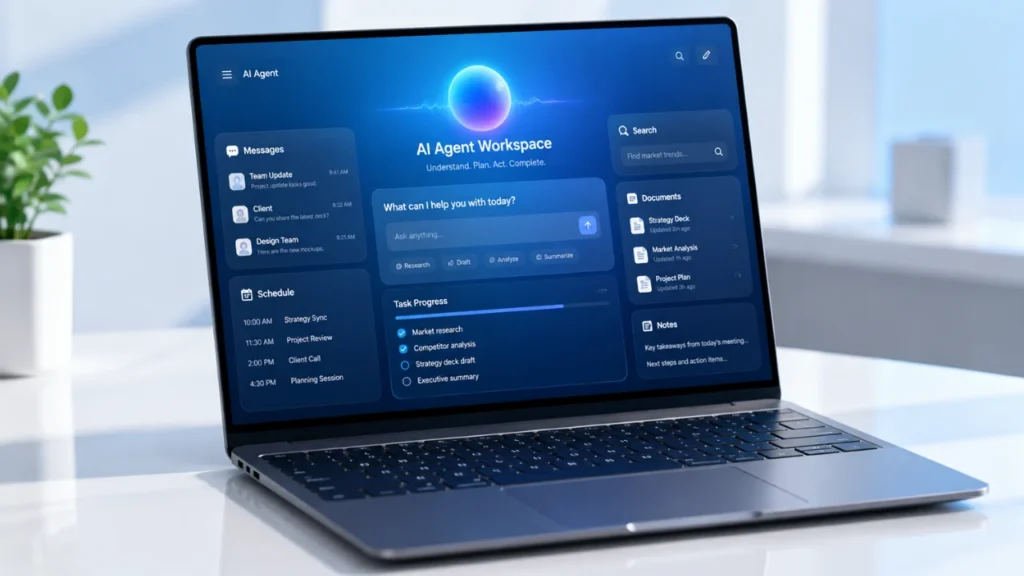
The company describes Microsoft Project Solara OS as an “agent-first” platform where AI agents act on behalf of users. Instead of manually switching between apps, users would tell an AI system what they want to accomplish, and the agent would coordinate the necessary actions behind the scenes.
That approach shifts the focus from software interfaces to outcomes.
In theory, users spend less time navigating apps and more time completing tasks.
How Microsoft Project Solara OS Works
Under the hood, Solara is based on an Android Open Source Project (AOSP) foundation, although Microsoft has wrapped it inside its own platform architecture. The company refers to the underlying framework as the Microsoft Device Ecosystem Platform.
The most distinctive feature is something Microsoft calls “just-in-time UI.”
Instead of developers building separate interfaces for phones, smart displays, wearables, or future devices, AI agents generate interfaces dynamically based on the user’s situation and device.
Microsoft Project Solara OS Key Concepts
| Feature | Description |
| Agent-First Design | AI agents perform tasks instead of apps |
| Just-in-Time UI | Interfaces generated dynamically |
| Android-Based Foundation | Built on AOSP technology |
| Multi-Device Support | Designed for emerging AI hardware |
| Cloud Integration | Chip-to-cloud architecture |
| Context Awareness | Interfaces adapt to user needs |
Why Microsoft Is Betting On An Agent-First Future
The announcement reflects a broader shift happening across the technology industry.
Companies increasingly view AI agents as the next major computing platform. Google, OpenAI, Anthropic, and Meta have all invested heavily in systems capable of taking actions rather than simply answering questions.
Microsoft appears to believe future users won’t want to manage dozens of apps for everyday tasks.
Instead, they may prefer intelligent assistants capable of handling scheduling, communications, shopping, research, and productivity workflows through a single conversational interface.
Consequently, Solara serves as Microsoft’s attempt to prepare for that future before it arrives.
Microsoft AI Behavior Testing Tool Could Solve One Of The Biggest Problems In Enterprise AI
Microsoft’s Concept Devices Reveal The Bigger Vision
To demonstrate the platform, Microsoft showcased two prototype devices.
The first, called the Desk Concept, resembles a smart display designed to keep users informed about what their AI agents are doing. It can function as a secondary display and even connect to Windows 365 cloud services.
The second concept is more unusual.
Microsoft demonstrated a wearable Badge Concept featuring a touchscreen, camera, microphones, fingerprint authentication, and 5G connectivity. The company envisions the device acting as a gateway to personal AI agents that can summarize meetings, retrieve information, and assist with daily tasks.
Although these products are not commercially available, they illustrate how Microsoft imagines AI-native hardware evolving over time.
The Biggest Challenge Facing Microsoft Project Solara OS
Despite the ambitious vision, Microsoft openly acknowledges that Solara remains experimental.
Many of the agent capabilities showcased during Build 2026 depend on AI systems that do not yet fully exist in production-ready form. The company itself presented the platform as a long-term concept rather than an immediate product roadmap.
That creates several challenges:
- AI reliability remains inconsistent.
- Agent autonomy raises security concerns.
- Developers still build software around apps.
- Consumers are familiar with app-centric workflows.
- Regulatory questions surrounding AI continue to grow.
Therefore, replacing traditional applications will likely take years rather than months.
Why This Matters For The Future Of Computing
The significance of Microsoft Project Solara OS goes beyond the platform itself.
Historically, major computing shifts occurred when interfaces changed. Command lines gave way to graphical interfaces. Desktop computing evolved into mobile computing. Now the industry is exploring whether AI agents could become the next interface layer.
If that happens, users may interact less with software and more with intelligent systems capable of completing tasks automatically.
Microsoft clearly wants a seat at that table.
Furthermore, the company’s broader Build 2026 announcements—including Scout, MAI models, Windows AI APIs, and RTX Spark-powered hardware—suggest that Solara fits into a much larger AI strategy.
Microsoft Unveils New AI Models To Cut Costs And Reduce Dependence On OpenAI
Final Thoughts
The idea behind Microsoft Project Solara OS sounds ambitious, and perhaps even futuristic. Yet many of today’s mainstream technologies once seemed equally unrealistic.
Microsoft is not launching a replacement for Windows or Android tomorrow. Instead, it is presenting a vision of a world where AI agents become the primary way people interact with technology.
Whether that future arrives remains uncertain. However, Build 2026 made one thing clear: Microsoft believes the next computing revolution may not be powered by better apps it may be powered by agents.
FAQs
Microsoft Project Solara OS is an experimental agent-first operating system concept designed around AI agents instead of traditional applications.
Yes. Microsoft built the platform on the Android Open Source Project (AOSP) while adding its own technologies and interface layer.
It is a concept where AI agents generate user interfaces dynamically based on context and device type.
No. Microsoft showcased concept hardware, but the devices are not currently available for purchase.
The company believes AI agents could eventually replace app-based workflows and become a new computing paradigm.