Quick Summary
- Microsoft has offered the first public look at the Surface Laptop Ultra, one of the flagship devices built around Nvidia’s RTX Spark platform.
- The laptop combines Nvidia’s new N1X superchip with Microsoft’s Copilot+ AI ecosystem.
- Microsoft claims the system can deliver up to 1 petaflop of AI computing performance.
- The device is designed primarily for local AI agents and large AI workloads rather than traditional laptop tasks.
The Nvidia RTX Spark Era Could Change What Consumers Expect From A Laptop
The arrival of The Nvidia RTX Spark Era may prove to be one of the most important shifts in personal computing since the transition from traditional PCs to AI-powered devices.
For years, laptop manufacturers have competed on battery life, display quality, and processor speed. Nvidia’s RTX Spark platform introduces a different selling point: bringing data-center-level AI capabilities into a portable computer.
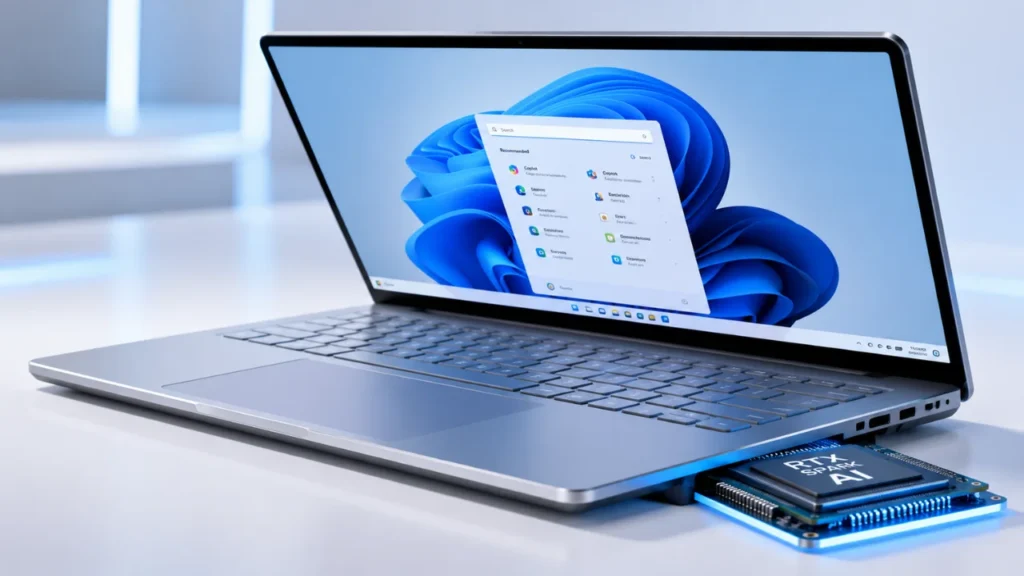
Microsoft’s newly unveiled Surface Laptop Ultra serves as one of the first examples of that vision. While many AI PCs currently focus on lightweight productivity features, RTX Spark machines are being built around the idea of running advanced AI models directly on the device.
That distinction could redefine the next generation of premium laptops.
Why The Nvidia RTX Spark Era Matters More Than Another Hardware Upgrade
Most consumers already have access to AI through cloud services.
However, cloud-based AI comes with limitations.
Users depend on internet connectivity, data often leaves the device, and large-scale AI workloads can become expensive over time. Nvidia’s strategy is to move more of that intelligence directly onto the laptop itself.
The company says RTX Spark hardware is capable of running AI models with up to 120 billion parameters locally. If those claims hold up in real-world testing, users could perform advanced AI tasks without relying entirely on remote servers.
As a result, AI assistants, content-generation tools, coding systems, and research agents could become faster, more private, and more responsive.
What Powers Microsoft’s New Surface Laptop Ultra?
At the center of The Nvidia RTX Spark Era is Nvidia’s new N1X processor.
The chip combines a 20-core CPU, integrated AI hardware, and graphics performance that Nvidia says is comparable to an RTX 5070 Laptop GPU. It also supports up to 128GB of unified memory.
RTX Spark N1X Platform Highlights
| Feature | Details |
| CPU | 20-Core Processor |
| Graphics | RTX 5070-Class GPU Performance |
| Memory | Up to 128GB Unified Memory |
| AI Compute | Up to 1 Petaflop |
| Platform | Windows on Arm |
| AI Support | Copilot+ Features |
Microsoft claims the Surface Laptop Ultra will offer more AI computing power than any previous Surface device.
Surface Laptop Ultra Focuses On AI First, Everything Else Second
One interesting takeaway from early hands-on impressions is that Microsoft appears to be treating AI as the laptop’s primary purpose.
Gaming and creative applications were demonstrated, but reports suggest those capabilities are secondary to local AI processing. The hardware is specifically designed for agentic AI workloads that can run directly on the device.
This reflects a broader industry trend.
Instead of simply adding AI features to laptops, manufacturers are beginning to build laptops around AI itself.
That shift could have significant implications for developers, researchers, content creators, and enterprise users.
The Nvidia RTX Spark Era Arrives With Premium Hardware
Although AI capabilities dominate the conversation, Microsoft has not ignored traditional hardware design.
Surface Laptop Ultra Specifications
| Feature | Details |
| Display Size | 15-inch |
| Display Type | Mini-LED PixelSense Ultra |
| Peak Brightness | Up to 2,000 Nits HDR |
| Refresh Rate | Up to 120Hz |
| Weight | Under 4.5 Pounds |
| Thickness | Less Than 18mm |
The laptop also includes:
- HDMI output
- USB-C ports
- USB-A connectivity
- SD card reader
- 3.5mm headphone jack
- Windows Hello facial recognition
Notably, Microsoft says the device includes the largest haptic touchpad ever used in a Surface laptop and a replaceable touchpad design intended to improve repairability.
Cooling May Be The Secret Behind The Performance
High-performance AI workloads generate substantial heat.
To address that challenge, Microsoft redesigned the cooling system inside the Surface Laptop Ultra.
According to information shown during Computex, the device uses a dual-fan, dual heat-pipe cooling solution with more than double the thermal capacity of the Surface Laptop 7 released in 2024.
That improvement could be critical.
AI workloads often run continuously for extended periods, making thermal management just as important as raw computing power.
Without effective cooling, even the most powerful processors struggle to maintain peak performance.
What This Means For The Future Of Windows PCs
The launch of the Surface Laptop Ultra suggests Microsoft and Nvidia are betting heavily on local AI computing.
Until now, most AI discussions have focused on cloud infrastructure. However, bringing advanced AI directly to consumer devices could create a new category of premium PCs.
If successful, The Nvidia RTX Spark Era may push competitors such as Intel, AMD, Apple, and Qualcomm to accelerate their own AI-focused hardware strategies.
The bigger question is whether consumers will see enough real-world benefits to justify the likely premium pricing.
That answer may determine how quickly the AI PC market evolves over the next several years.
Final Thoughts
The beginning of The Nvidia RTX Spark Era is about more than a new laptop.
It represents a shift toward computers designed primarily for AI-native experiences rather than traditional productivity tasks. Microsoft’s Surface Laptop Ultra serves as an early showcase for that vision, combining powerful hardware, local AI processing, and premium design into a single device.
Real-world testing will ultimately determine whether RTX Spark lives up to its ambitious promises. However, one thing is already clear: Nvidia and Microsoft are attempting to redefine what a high-end Windows laptop can do.
FAQs
RTX Spark is Nvidia’s new AI-focused laptop platform built around the N1X superchip.
It is Microsoft’s flagship AI PC powered by Nvidia’s RTX Spark hardware.
Microsoft claims the device can deliver up to 1 petaflop of AI computing power.
According to Nvidia, the platform can run AI models with up to 120 billion parameters directly on the device.
Microsoft expects the device to arrive in fall 2026