Smartwatches have become more powerful than ever, but many people are starting to ask a simple question: Do we really need all of that technology on our wrists?
Google’s new Fitbit Air arrives at a time when wearable devices seem determined to do everything. They display notifications, run apps, answer calls, and constantly compete for attention. The Fitbit Air takes a completely different approach. It removes the screen altogether and focuses on one job: tracking your health.
That decision may sound old-fashioned, but it could be exactly what many users have been waiting for.
However, while the hardware embraces simplicity, Google’s new AI-powered Health Coach sometimes feels like it’s moving in the opposite direction.
Siri Could Decide Whether Apple Wins or Loses the AI Race
The Fitbit Air Is Built for People Tired of Smartwatch Overload
The most interesting thing about the Fitbit Air isn’t what it does. It’s what it refuses to do.
There is no display. No endless notifications. No app icons. No social media alerts buzzing throughout the day.
Instead, the Fitbit Air is a small sensor-packed wearable designed to disappear into daily life. It tracks key health metrics including heart rate, blood oxygen levels, skin temperature, sleep patterns, and activity data while remaining significantly lighter and less distracting than a traditional smartwatch.
For many consumers, that’s a refreshing idea.
The wearable market has spent years convincing people they need more features. The Fitbit Air suggests some users may actually want fewer.
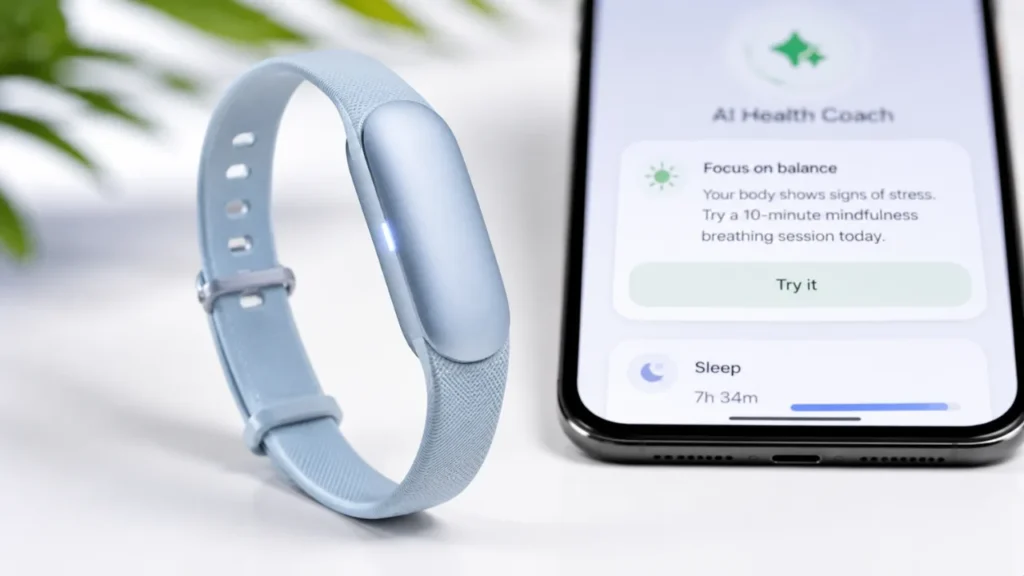
Why Screenless Wearables Could Be Making a Comeback
The biggest strength of the Fitbit Air appears to be comfort.
Because it lacks a display and bulky smartwatch hardware, users can wear it throughout the day and night without constantly noticing it’s there. The device also delivers roughly a week of battery life, making it far less demanding than many smartwatches that require frequent charging.
That matters more than it might seem.
Health tracking only works when people consistently wear their devices. A fitness tracker sitting on a charger isn’t collecting useful information.
As wearable technology becomes increasingly focused on long-term health monitoring, comfort may become just as important as raw technological capability.
Google’s AI Health Coach Is the Real Story
While the Fitbit Air hardware keeps things simple, Google’s broader health strategy is clearly centered on artificial intelligence.
The company has integrated a Gemini-powered Health Coach into its new health platform. The AI analyzes activity, sleep, recovery, and other wearable data to generate summaries, recommendations, and personalized insights.
On paper, that sounds useful.
Most people collect enormous amounts of health data but struggle to understand what it actually means. AI promises to bridge that gap by translating numbers into actionable advice.
Yet this is where Google’s approach becomes more complicated.
macOS 27 Features: 5 Biggest WWDC 2026 Announcements We Expect
The Problem With AI That Always Has Something to Say
One challenge facing many AI products today is knowing when to stop talking.
Consumers increasingly appreciate tools that save time. They are less enthusiastic about technology that turns every interaction into a lengthy conversation.
The Fitbit Air highlights this tension perfectly.
Google’s Health Coach appears eager to explain, summarize, encourage, and analyze nearly every health metric it encounters. While some users may appreciate detailed coaching, others may find that the constant stream of AI-generated feedback adds unnecessary complexity to what should be a straightforward fitness experience.
This reflects a larger trend across the technology industry.
Companies are racing to add AI features everywhere, but consumers often value clarity and simplicity more than endless AI-generated commentary.
AI Health Advice Still Faces Familiar Challenges
Another issue is reliability.
Although modern AI systems continue improving, they are not perfect. Health-related applications require a particularly high level of accuracy because users may rely on those insights when making decisions about exercise, recovery, and overall wellness.
Reports suggest Google’s Health Coach occasionally misinterprets activity data or generates conclusions that don’t fully align with recorded information.
These aren’t necessarily major failures, but they highlight an important reality.
AI remains a helpful assistant rather than an authoritative expert.
For most consumers, wearable data should still be viewed as informational guidance rather than medical advice.
Apple AI Siri Upgrade May Be The Most Important WWDC 2026 Announcement
What the Fitbit Air Says About the Future of Wearables
The Fitbit Air may ultimately represent a larger shift in consumer technology.
For years, technology companies competed by adding more screens, more features, and more notifications. Now some products are finding success by removing those things.
Many consumers already spend hours each day looking at phones, tablets, laptops, and televisions. The idea of wearing another screen on the wrist has become less appealing for some users.
The Fitbit Air offers an alternative.
It quietly collects health data, stays out of the way, and focuses on the basics. Ironically, that approach may feel more innovative today than adding another layer of complexity.
The Bigger Question Google Needs to Answer
The success of the Fitbit Air may not depend on its sensors, battery life, or design.
Instead, it may depend on whether users actually want an AI health coach in the first place.
The wearable itself appears to solve a clear problem. It offers lightweight health tracking without the distractions of a smartwatch.
The AI experience is less straightforward.
Consumers generally want technology that helps them make better decisions. They don’t necessarily want constant encouragement, lengthy summaries, or automated commentary attached to every activity.
As AI becomes more deeply integrated into health and fitness products, companies may discover that users prefer concise insights over conversational coaching.
TV USB Port Uses Most People Ignore But Shouldn’t
Conclusion
The Fitbit succeeds because it understands something many technology companies have forgotten: sometimes less is more.
Its lightweight design, week-long battery life, and screenless approach make it an appealing option for people who want health tracking without smartwatch distractions.
At the same time, Google’s AI-powered Health Coach reveals an important challenge facing the entire technology industry. Artificial intelligence can make products smarter, but it doesn’t automatically make them better.
The companies that win the next phase of consumer AI may be the ones that know when to stay quiet.
FAQs
The Fitbit Air is a screenless fitness tracker designed to monitor health metrics such as heart rate, sleep, activity, blood oxygen levels, and skin temperature.
No. The Fitbit Air removes the traditional smartwatch screen and focuses entirely on health tracking.
Health Coach is Google’s AI-powered wellness assistant that analyzes Fitbit data and provides personalized health insights and recommendations.
It depends on your needs. Users who want fewer distractions and longer battery life may prefer the Fitbit Air over a traditional smartwatch.
People who want health tracking without notifications, apps, and constant screen interactions may find the Fitbit Air appealing.