Artificial intelligence assistants usually wait for instructions. You ask a question, they provide an answer, and the interaction ends there.
Microsoft believes the next generation of AI will work differently.
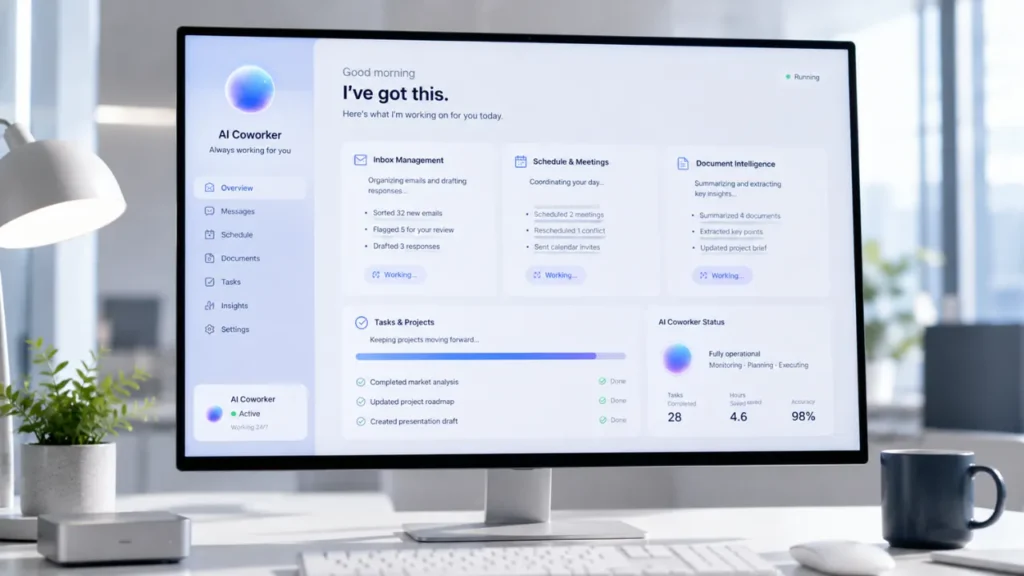
At Build 2026, the company introduced Microsoft Scout, an always-on AI agent designed to operate continuously in the background, monitor workflows, coordinate tasks, and take action across workplace applications without requiring constant prompts.
The announcement represents one of Microsoft’s boldest attempts yet to move AI beyond chatbots and into the role of an active digital coworker.
Microsoft Project Solara OS Could Replace Apps With AI Agents-At Least That’s Microsoft’s Vision
Microsoft Scout Introduces A New Category Of AI Agents
According to Microsoft, Scout belongs to a new category of AI systems called “Autopilots.”
Unlike traditional assistants that respond only when asked, Autopilots remain active, maintain context, and perform tasks on behalf of users within predefined permissions and organizational policies.
That distinction matters.
Most AI tools today function as reactive systems. They answer questions, generate content, or analyze information after receiving a request.
Microsoft wants Scout to become proactive.
Instead of waiting for instructions, the system can identify tasks, monitor workflows, and help keep projects moving even when users are focused elsewhere.
How Microsoft Scout Works Across Microsoft 365
Microsoft built Scout directly into the Microsoft 365 ecosystem.
The agent connects with Teams, Outlook, OneDrive, SharePoint, calendars, emails, chats, and contacts, allowing it to understand activity across an organization’s workflow.
Microsoft Scout Features
| Feature | Description |
| Always-On Operation | Runs continuously in the background |
| Teams Integration | Accessible through Microsoft Teams |
| Calendar Management | Coordinates meetings and schedules |
| Task Monitoring | Tracks deadlines and deliverables |
| Cross-App Support | Works across Microsoft 365 services |
| Enterprise Controls | Operates within organizational policies |
Additionally, Scout can extend beyond Microsoft’s cloud services through desktop integrations, browser access, and support for Model Context Protocol (MCP) servers.
That broader connectivity gives the agent visibility into a much larger portion of a user’s digital workspace.
MAI-Thinking-1 Reasoning Model Signals Microsoft’s Biggest AI Ambition Yet
Why Microsoft Scout Is Different From Existing AI Assistants
The most interesting aspect of Scout is not its ability to answer questions.
Instead, it’s the company’s vision for autonomous workplace coordination.
Microsoft says Scout can:
- Schedule meetings across time zones
- Prepare briefing materials
- Track upcoming deliverables
- Reserve calendar time for important work
- Identify workflow bottlenecks
- Surface risks before they become major issues
Consequently, the agent behaves less like a chatbot and more like a digital project coordinator.
For busy professionals, that could eliminate many of the repetitive administrative tasks that consume large portions of the workday.
Work IQ May Be The Secret Behind Microsoft Scout
A major part of Scout’s functionality comes from Microsoft’s new Work IQ system.
According to the company, Work IQ helps the agent build contextual understanding over time. It learns how users work, identifies priorities, and determines what actions may be needed next.
That ongoing context is important because enterprise work rarely happens through isolated conversations.
Projects evolve over weeks or months.
Meetings generate follow-up actions.
Deadlines shift.
Priorities change.
Microsoft believes agents need long-term memory and situational awareness to become genuinely useful in professional environments.
Security Could Determine Whether Microsoft Scout Succeeds
Autonomous AI agents introduce a major challenge: trust.
Organizations are unlikely to allow software to act independently unless strong security controls exist.
Microsoft appears aware of that concern.
The company says Scout operates with its own governed Microsoft Entra identity rather than a shared service account. Every action remains tied to a known identity within the organization’s directory infrastructure.
Furthermore, Scout respects existing access permissions, data protection policies, and compliance requirements already configured by IT teams. Sensitive actions can also require human approval before execution.
As a result, Microsoft is positioning Scout as an enterprise tool rather than a consumer experiment.
Microsoft AI Behavior Testing Tool Could Solve One Of The Biggest Problems In Enterprise AI
The Open Source Connection Is An Important Detail
Another notable aspect of the announcement involves Microsoft’s development strategy.
The company says Scout is powered by OpenClaw, an open-source technology platform that Microsoft has extended for enterprise use.
Microsoft also plans to contribute policy-conformance capabilities back to the broader OpenClaw community.
That approach reflects a growing trend in enterprise AI, where companies combine open-source foundations with commercial security, governance, and management layers.
What This Means For The Future Of Work
The introduction of Microsoft Scout highlights a larger shift happening across the AI industry.
The focus is moving beyond AI assistants that answer questions and toward systems that actively participate in work.
If Microsoft’s vision succeeds, future employees may manage teams that include both human coworkers and AI agents.
Those agents could coordinate meetings, monitor projects, prepare documents, and handle routine operational work automatically.
While that future remains in its early stages, Scout provides one of the clearest examples yet of how major technology companies expect workplace AI to evolve.
Final Thoughts
Microsoft Scout is not simply another Copilot feature.
Instead, it represents Microsoft’s attempt to create an AI agent that works continuously, builds long-term context, and actively contributes to workplace productivity.
Whether organizations fully embrace autonomous agents remains uncertain. However, the concept addresses a real problem: professionals spend enormous amounts of time coordinating work instead of completing it.
If Scout can reliably reduce that burden while maintaining enterprise-grade security, it may become one of Microsoft’s most important AI products of the next decade.
Microsoft Unveils New AI Models To Cut Costs And Reduce Dependence On OpenAI
FAQs
Microsoft Scout is an always-on AI agent that can coordinate tasks, manage workflows, and take actions across Microsoft 365 applications.
Autopilots are Microsoft’s new category of autonomous AI agents that remain active and perform tasks on behalf of users.
Scout integrates with Teams, Outlook, OneDrive, SharePoint, calendars, chats, emails, and contacts.
Work IQ is Microsoft’s contextual intelligence system that helps Scout learn priorities and understand ongoing workflows.
Microsoft is currently offering Scout to select customers through a private preview and Frontier program