Summer may be in full swing across much of the United States, but parts of the West are experiencing weather that feels more like late winter. Forecasters have issued multiple winter storm warnings for high-elevation areas as a powerful Pacific storm brings heavy mountain snow, strong winds, and flooding concerns to several states.
- Heavy snow is expected above 6,500–7,000 feet in parts of the western U.S.
- Some mountain locations could receive up to 3 feet of snowfall.
- Wind gusts may reach 60 mph, creating dangerous travel conditions.
- Flooding, mudslides, and rough lake conditions are also possible in some areas.
- Campers, hikers, and holiday travelers should closely monitor local forecasts.
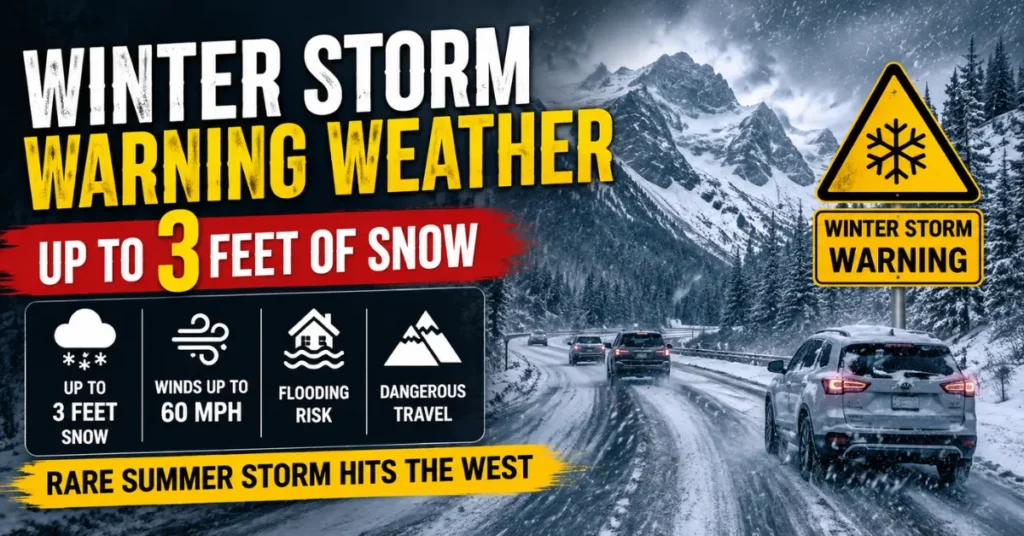
Winter Storm Warning Weather Brings Unusual Late-June Snow to the Western U.S.
A powerful Pacific weather system is delivering an unusually cold air mass into parts of the western United States just days before July begins. While lower elevations will mostly experience rain and cooler temperatures, mountain communities are preparing for significant snowfall.
Weather experts say the highest snowfall totals are expected across portions of the Sierra Nevada, Cascades, Northern Rockies, and other high-elevation mountain ranges where temperatures remain cold enough for snow accumulation. Areas above roughly 6,500 to 7,000 feet face the greatest risk.
Read Also-Google Warns AI-Powered Hackers Are Already Creating Dangerous Zero-Day Exploits
Areas Facing the Greatest Impacts
| Weather Hazard | Expected Impact |
| Heavy mountain snow | Up to 3 feet in highest elevations |
| Strong wind gusts | Up to 60 mph in some areas |
| Flooding | Heavy rainfall may cause flash flooding |
| Mudslides | Increased risk near steep mountain terrain |
| Travel disruptions | Difficult driving conditions on mountain roads |
Heavy Snow Could Surprise Campers and Summer Travelers
The timing of this storm makes it especially unusual.
Many people are heading into the mountains for hiking, camping, and early Independence Day trips. However, conditions at higher elevations could quickly become dangerous as temperatures drop and snowfall increases.
Forecasters warn that even experienced outdoor enthusiasts may encounter winter-like conditions despite the calendar showing summer. Visibility could rapidly decrease during periods of heavy snow, while strong winds may make travel even more hazardous.
Flooding and Mudslide Risks Increase in Some Mountain Regions
Snow isn’t the only concern.
Lower elevations are expected to receive periods of heavy rainfall, increasing the risk of flooding along creeks, rivers, and low-lying areas. Emergency officials are also watching for possible mudslides and rockfalls in mountainous terrain where saturated ground can become unstable.
Campers staying near rivers, reservoirs, or mountain streams should remain alert for rapidly changing water levels. The reference weather reports also highlight concerns about runoff and debris flows in vulnerable mountain corridors.
Strong Winds Add Another Layer of Danger
The same weather system is also generating powerful winds across parts of the West.
Some locations could experience gusts approaching 60 mph, making travel difficult for high-profile vehicles while creating dangerous conditions for boaters on lakes. Strong winds may also increase the risk of falling trees and blowing debris in exposed areas.
Read Also-The Price of Nvidia RTX Spark PC Is About To Shock Early AI Adopters
What Residents and Travelers Should Do
Anyone planning to travel through higher elevations should prepare for rapidly changing weather conditions.
Consider these safety steps:
- Check the latest National Weather Service forecasts before traveling.
- Delay mountain travel if heavy snow is expected.
- Carry extra food, water, blankets, and emergency supplies.
- Avoid flooded roads and fast-moving streams.
- Keep multiple ways to receive emergency weather alerts.
Even if conditions appear mild in nearby cities, mountain weather can change quickly during strong Pacific storm systems.
Why This Weather Event Is Getting Attention
Late-June snow isn’t impossible, but snowfall of this magnitude during the opening days of summer is uncommon enough to draw widespread attention.
Meteorologists note that similar late-season snow events have occurred historically in western mountain ranges, although this week’s combination of heavy snow, powerful winds, and flooding concerns makes the system particularly notable for outdoor recreation and holiday travel planning.
FAQs
Higher mountain elevations can still receive snow when an unusually cold storm system moves through, even in late June or early July.
High-elevation regions of the Sierra Nevada, Cascades, Northern Rockies, and nearby mountain ranges face the greatest snowfall risk.
Some of the highest peaks could receive up to 3 feet of snow, while lower mountain elevations may see lighter accumulations.
Yes. Heavy rainfall at lower elevations may trigger flash flooding, increased runoff, and isolated mudslides in some mountain communities.
Anyone planning mountain travel should check updated weather forecasts and road conditions before leaving, especially if traveling through higher elevations.
The latest winter storm warning weather highlights how quickly conditions can change across the western United States, even during summer. Travelers, campers, hikers, and residents in higher elevations should closely monitor local forecasts, remain flexible with travel plans, and be prepared for hazardous conditions as this powerful storm moves through the region.
Read Also- Dell Launches XPS 13 To Challenge MacBook Neo In The Affordable Premium Laptop Market

Anku is a Technology News writer covering Smartphones, AI, software, gaming, laptops, iOS updates, tech trends. He focuses on creating simple, informative, and reader-friendly news in Simple English Language.