Quick Summary
- YPlasma has unveiled a fanless cooling solution based on dielectric barrier discharge (DBD) plasma technology.
- The system replaces traditional spinning fans with a 200-micrometer-thick plasma actuator that generates airflow through ionic wind.
- The technology debuted on NVIDIA’s Jetson Orin Nano platform at Computex 2026.
- If successfully scaled, it could eventually influence cooling designs for gaming PCs, AI devices, laptops, and edge computing hardware.
YPlasma Solid State Cooling Fanless Design Challenges Decades Of PC Cooling Standards
For years, PC cooling has followed the same basic formula: bigger heatsinks, faster fans, and sometimes louder systems.
Now, a startup called YPlasma is proposing something radically different.
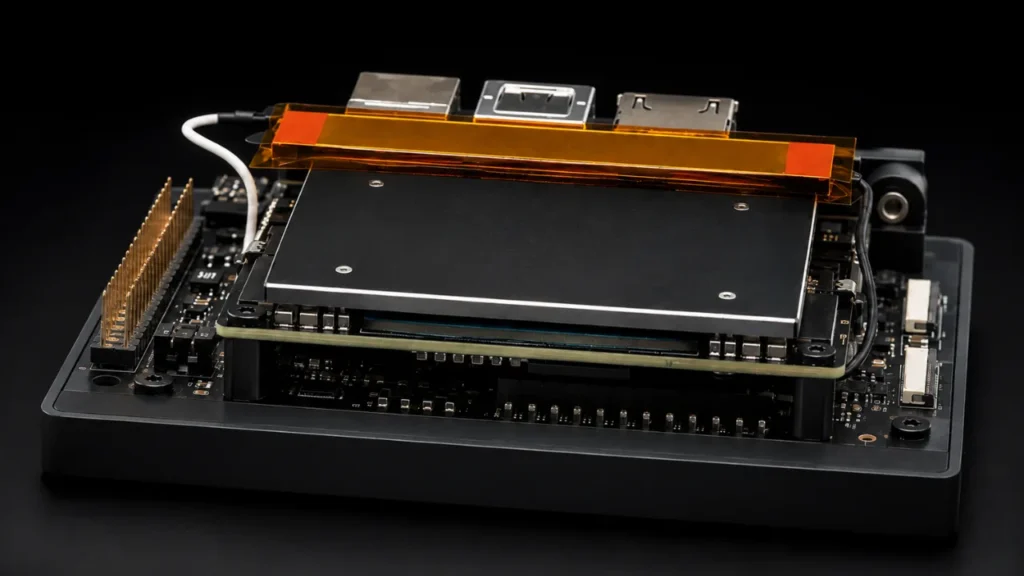
The new YPlasma Solid State Cooling Fanless technology removes the rotating fan entirely and replaces it with an ultra-thin plasma actuator that creates airflow without moving mechanical parts. The company showcased the system at Computex 2026 running on NVIDIA’s Jetson Orin Nano platform.
While the demonstration targeted AI and edge-computing hardware, the announcement raises a fascinating question for PC enthusiasts: could future gaming systems eventually run without traditional cooling fans?
Why YPlasma Solid State Cooling Fanless Technology Is Getting Attention
Cooling rarely grabs headlines unless something goes wrong.
However, thermal management has become one of the biggest challenges facing modern computing. CPUs, GPUs, and AI accelerators continue to consume more power, yet users expect devices to remain compact, quiet, and reliable.
YPlasma believes conventional cooling solutions have reached practical limits in some environments. According to the company, passive heatsinks can throttle performance, while rotary fans introduce noise, wear, dust accumulation, and mechanical failure risks.
Instead of spinning blades, the company’s approach generates what is known as ionic wind through plasma-based airflow.
The result is a cooling system with no rotating components.
Read Also- Dell Alienware Laptop Launch Could Make Premium Gaming More Affordable Than Ever
How The Technology Actually Works
The core of the system is a dielectric barrier discharge (DBD) plasma actuator.
Rather than physically pushing air with blades, the actuator creates electrically driven airflow using ionized particles.
Key Specifications
| Feature | Details |
| Cooling Method | DBD Plasma Ionic Wind |
| Thickness | 200 Micrometers |
| Power Consumption | Under 1W |
| Supported Workloads | 7W to 25W |
| Form Factor | Flexible, Surface-Conformal |
| Moving Parts | None |
| Noise Generation | Virtually Silent |
According to YPlasma, the actuator is between 40 and 60 times thinner than the micro-fans it can replace.
That thin profile could become particularly valuable in compact electronics where every millimeter matters.
Why Gamers Should Care
At first glance, the announcement appears focused on AI hardware rather than gaming PCs.
However, the broader implications are difficult to ignore.
The biggest advantages of YPlasma Solid State Cooling Fanless systems could include:
- Near-silent operation
- No fan wear over time
- Reduced dust accumulation
- Thinner hardware designs
- Lower maintenance requirements
- Potentially improved reliability
Gaming enthusiasts spend significant amounts of money on premium coolers designed to reduce noise. Consequently, a future where airflow exists without spinning fans would represent a major shift in PC design philosophy.
Of course, current gaming CPUs and GPUs often exceed 100W or even 300W of power consumption. Therefore, YPlasma still faces a significant challenge before the technology can cool flagship gaming hardware.
The AI Boom May Be Accelerating Adoption
Interestingly, gaming may not be the first market to benefit.
YPlasma says increasing demand for continuous AI workloads has created new cooling challenges for compact systems. Edge AI devices often run around the clock, making reliability and power efficiency increasingly important.
The company specifically highlighted potential demand from:
- Autonomous vehicles
- Telecom infrastructure
- Robotics platforms
- Drone systems
- Energy electronics
- Edge AI computing
These markets typically adopt new cooling technologies earlier than consumer PCs because reliability often matters more than cost.
Can Fanless Plasma Cooling Replace Gaming PC Fans?
Not yet.
That distinction is important.
The current demonstration covers workloads ranging from 7W to 25W, which is impressive for compact computing platforms but far below the thermal demands of high-end gaming desktops.
However, disruptive technologies often begin with smaller use cases before expanding.
A decade ago, many people doubted vapor chambers would become mainstream in laptops and smartphones. Today, they are common across the industry.
Similarly, plasma-based cooling may initially appear in embedded systems, AI hardware, and ultrathin devices before moving toward larger computing platforms.
What Makes YPlasma Different?
The company has already attracted attention within the hardware industry.
YPlasma describes itself as the only company currently commercializing ionic wind cooling based on DBD plasma actuators. It is also a member of NVIDIA Inception and collaborates with Princeton Plasma Physics Laboratory. Additionally, the company showcased what it called the world’s first noiseless laptop earlier this year at CES 2026.
Those milestones suggest the technology is progressing beyond the experimental stage.
Read Also-Intel Arc G-Series Launches To Challenge AMD In Next-Generation Gaming Handhelds
Final Thoughts
The YPlasma Solid State Cooling Fanless concept won’t replace gaming PC fans overnight. Nevertheless, it offers one of the most intriguing cooling innovations to emerge from Computex 2026.
While today’s demonstration focuses on NVIDIA Jetson hardware and edge AI systems, the long-term vision is much larger. If plasma-generated airflow can scale to higher power levels, future PCs, laptops, and gaming systems could become quieter, thinner, and potentially more reliable than current fan-based designs.
For now, gamers should view the technology as an early glimpse into what the next generation of cooling may look like.
FAQs
It is a cooling system that uses plasma-generated ionic wind instead of traditional spinning fans.
No. The cooling solution operates without mechanical fans or rotating components.
YPlasma says its plasma actuator is only 200 micrometers thick.
Not currently. The demonstrated system supports workloads ranging from 7W to 25W.
It could enable quieter, thinner, and potentially more reliable computing devices in the future.