The United States Supreme Court is currently preparing to hand down one of the most consequential decisions in modern American history. As the court wraps up its term on June 30, 2026, millions of citizens, legal experts, and immigrant families are anxiously awaiting the impending birthright citizenship ruling. This highly anticipated judgment has the potential to fundamentally rewrite over 150 years of established constitutional law.
Here is a complete breakdown of the executive order that sparked the legal battle, the constitutional arguments at play, and exactly what is at stake for hundreds of thousands of families across the country.
Read Also- Supreme Court Ends TPS for Haitians: Inside the Historic 2026 Ruling
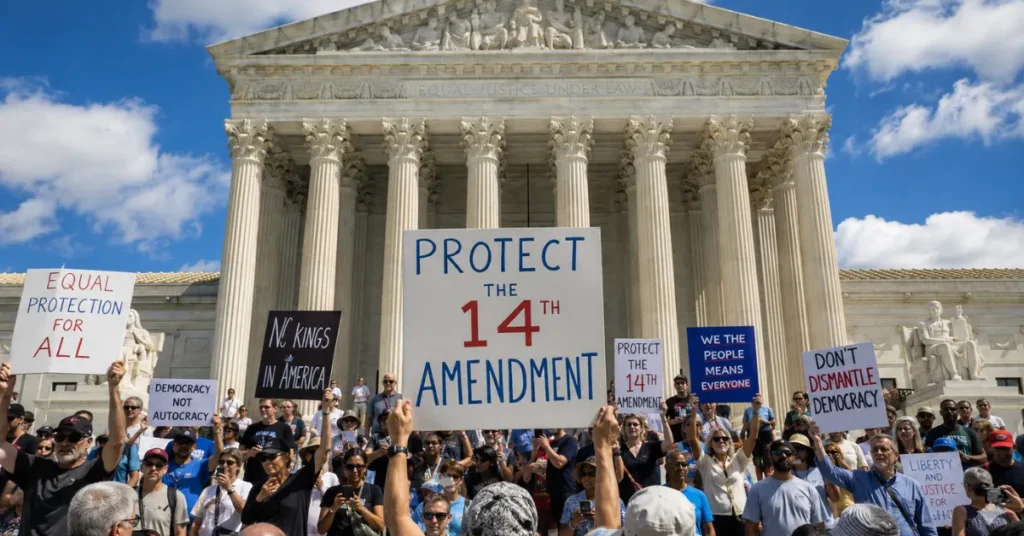
The Executive Order Challenging the 14th Amendment
The current legal showdown traces its roots back to January 2025. On the first day of his second term, President Donald Trump signed an executive order aimed at ending automatic citizenship for children born on U.S. soil if neither of their parents are American citizens or permanent legal residents.
Historically, the United States has practiced a legal concept known as jus soli—often referred to as the “right of the soil.” Following the Civil War, the 14th Amendment was ratified in 1868 to guarantee that “all persons born or naturalized in the United States, and subject to the jurisdiction thereof, are citizens of the United States.” For over a century, the government has interpreted this to mean that virtually anyone born within the nation’s borders is automatically granted full American citizenship, regardless of their parents’ immigration status.
The administration’s 2025 executive order aggressively challenges this long-standing interpretation. The government argues that children of undocumented immigrants or foreign nationals holding temporary visas are not fully “subject to the jurisdiction” of the United States. By narrowing the definition of that specific phrase, the administration is attempting to change immigration policy without needing Congress to pass a new constitutional amendment.
The Stakes for American Families
The legal and human stakes of today’s decision are massive. Immediately after the President signed the order, civil rights organizations like the ACLU sued the administration, resulting in lower federal courts temporarily blocking the policy’s implementation. After navigating the appeals process, the Supreme Court heard oral arguments for the case in April 2026, leaving the final verdict entirely in the hands of the conservative-majority bench.
If the justices rule in favor of the administration and uphold the executive order, the social landscape of the country will shift overnight. According to demographic data, roughly one in nine babies born in the United States each year are born to undocumented parents.
Legal scholars warn that stripping away this automatic path to citizenship could leave hundreds of thousands of children effectively stateless, as no other country would be legally obligated to accept them. Without recognized American citizenship, these children would immediately lose fundamental rights, including the ability to legally work, access certain public education systems, or establish permanent residency in the only country they have ever known.
Read Also- East Wing Ballroom Executive Residence Contract: Inside the $500M White House Deal
With the 2026 Supreme Court term officially coming to a close, the entire nation is watching Washington to see if a core pillar of American identity will stand or fall.
Frequently Asked Questions (FAQs)
It is the legal practice of granting automatic citizenship to almost anyone born within the territorial borders of a country, regardless of the nationality or immigration status of their parents.
The order seeks to deny automatic U.S. citizenship to children born in the country if their parents are undocumented immigrants or are only living in the U.S. temporarily on tourist, student, or work visas.
No, but it is in the minority globally. The U.S. is one of a few dozen countries—mostly located in North and South America, including Canada and Mexico—that explicitly grants automatic citizenship based on birthplace.
Ratified in 1868, the 14th Amendment contains the Citizenship Clause, which guarantees citizenship to “all persons born or naturalized in the United States.” It was originally drafted during the Reconstruction era to ensure formerly enslaved people were recognized as full citizens.
If the court sides with the administration, children born to undocumented or temporary-visa-holding parents will no longer be recognized as U.S. citizens at birth, meaning they will not have the legal right to work, vote, or live permanently in the country without going through a separate immigration process.
Read Also- Inside the US Corte Suprema: Historic Immigration Rulings and the Temple of Justice