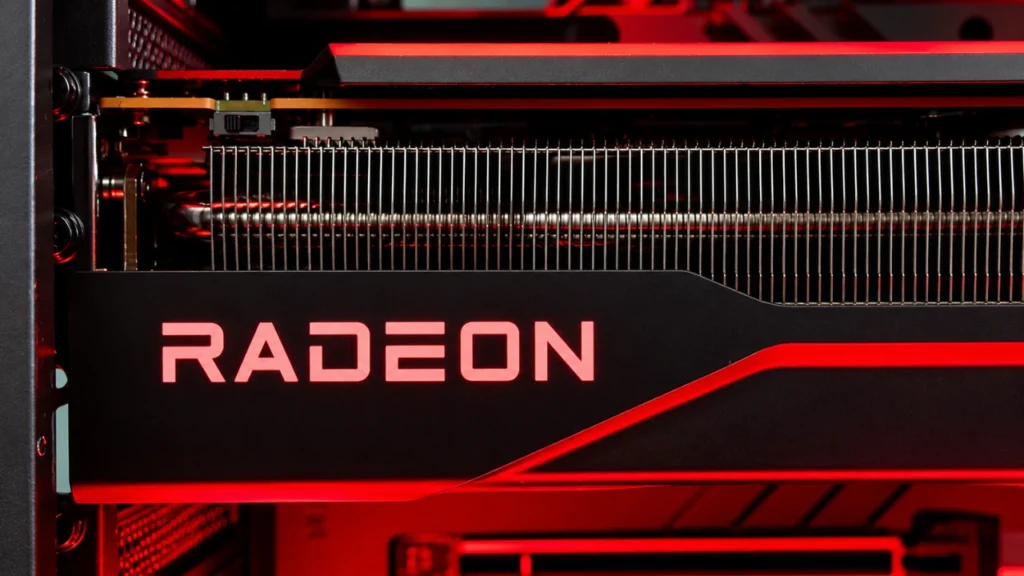
Building a gaming PC has never been cheap, but many gamers at least expect better performance when they spend more money. That’s why AMD’s new Radeon RX 9070 GRE is generating mixed reactions. On paper, it’s a brand-new graphics card aimed at the popular 1440p gaming market. In reality, it raises a question many PC enthusiasts have been asking lately: Are gamers getting less value for their money than they did a year ago?
The RX 9070 GRE arrives with a $549 price tag, placing it directly in the middle of one of the most competitive GPU segments. However, compared to AMD’s own Radeon RX 9070, which launched at the same $549 price point, the new card offers less memory, fewer GPU cores, and lower memory bandwidth.
For consumers trying to decide where to spend their upgrade budget, that comparison matters more than any marketing slogan.
Nvidia Chips for Windows PCs Could Finally Challenge Apple’s Laptop Dominance
Why the Radeon RX 9070 GRE Feels Different
Most new graphics cards are designed to move performance forward.
The RX 9070 GRE takes a different path.
AMD has reduced several key hardware specifications compared to the standard RX 9070. The card includes 12GB of memory instead of 16GB, a narrower memory bus, and fewer processing cores.
For casual gamers, those numbers may not seem important today. However, graphics cards are often long-term purchases. Many buyers expect a GPU to last several years before upgrading again.
That makes memory capacity particularly important.
As modern games continue demanding more resources, extra VRAM can become the difference between comfortably running future titles and lowering settings sooner than expected.
The Real Audience for This GPU
The good news is that the RX 9070 GRE isn’t a bad graphics card.
For 1440p gaming, it delivers strong performance and can comfortably handle most modern titles. Benchmark results show it significantly outperforming lower-tier options while remaining capable of smooth gameplay at high settings.
The challenge is not performance.
The challenge is value.
Many gamers shopping in the $500-plus price range are looking beyond today’s games. They want a graphics card that can continue performing well two, three, or even four years from now.
That’s where the GRE becomes a harder sell.
1440p Looks Good, but 4K Tells a Different Story
One of the biggest trends in PC gaming is the gradual move toward higher resolutions.
Even gamers who aren’t playing at 4K today often want a graphics card capable of handling it in the future.
According to performance testing, the RX 9070 GRE starts showing its limitations more clearly at 4K resolutions, particularly when ray tracing enters the equation. Some demanding titles require upscaling technologies or reduced settings to maintain strong performance.
That’s not necessarily unusual for a midrange graphics card.
What makes it noteworthy is that AMD already sells a stronger alternative in the RX 9070.
For buyers willing to spend slightly more, the standard RX 9070 offers more memory, greater bandwidth, and noticeably stronger performance.
The Price of Nvidia RTX Spark PC Is About To Shock Early AI Adopters
The Bigger Story Isn’t AMD
The Radeon RX 9070 GRE also reflects a broader trend affecting the entire PC industry.
Graphics card prices remain elevated compared to previous generations. Supply chain pressures, growing AI hardware demand, and memory costs have all contributed to higher prices across the market.
As a result, manufacturers are increasingly trying to fill every possible price tier.
For consumers, that can create confusion.
Instead of a simple lineup where each new product clearly improves upon the last, buyers now face multiple versions of similar GPUs with subtle differences in performance, memory, and pricing.
The RX 9070 GRE feels like a product created to occupy a specific gap in AMD’s lineup rather than solve a clear problem for gamers.
Nvidia Still Shapes the Conversation
AMD’s biggest challenge remains Nvidia.
While AMD continues improving technologies such as FSR upscaling, Nvidia maintains advantages in software adoption, ecosystem support, and features like DLSS. Many games still prioritize Nvidia’s technologies first.
That means AMD often needs a stronger value proposition to convince gamers to switch.
Historically, AMD accomplished that by offering more memory or similar performance at a lower price.
The RX 9070 GRE complicates that formula because its pricing places it uncomfortably close to stronger alternatives.
What Smart PC Buyers Should Consider
For gamers currently using older graphics cards such as the RTX 3070, RX 6800, or earlier models, the RX 9070 GRE will still feel like a meaningful upgrade.
The question isn’t whether it’s faster.
The question is whether it’s the smartest use of $549.
Buyers planning to keep their graphics card for several years may benefit from considering options with more memory and stronger long-term performance potential.
The GPU market is moving quickly, and games are becoming increasingly demanding. A few extra gigabytes of memory today could make a significant difference tomorrow.
The Nvidia RTX Spark Era Begins With Microsoft’s Most Ambitious Surface Laptop Yet
Why This Matters Beyond One Graphics Card
The RX 9070 GRE may ultimately be remembered less for its performance and more for what it represents.
Consumers across multiple industries have noticed a growing pattern: products that cost the same as previous generations while offering fewer features, reduced capabilities, or lower value.
Gamers are noticing it too.
The Radeon RX 9070 GRE isn’t a failure. It can deliver enjoyable gaming experiences and strong 1440p performance.
However, it also serves as a reminder that consumers need to look beyond product names and marketing labels. Sometimes the most important question isn’t how new a product is.
It’s whether you’re actually getting more for your money.
Conclusion
AMD’s Radeon RX 9070 GRE arrives at a difficult moment for PC gamers. Hardware prices remain high, upgrade budgets are stretched, and buyers expect every dollar to count.
The card succeeds as a capable 1440p gaming GPU, but its value proposition becomes harder to justify when stronger alternatives exist nearby in AMD’s own lineup.
For gamers focused on long-term value, the biggest lesson may be simple: compare specifications carefully before upgrading.
Because in today’s GPU market, newer doesn’t always mean better.
Nvidia Chips for Windows PCs Could Open A $200 Billion AI Opportunity
FAQs
The Radeon RX 9070 GRE is a midrange RDNA 4 graphics card designed primarily for 1440p gaming.
The card includes 12GB of GDDR6 memory.
It can handle some 4K gaming workloads, but demanding games often require lower settings or upscaling technologies.
The standard RX 9070 offers more memory, greater memory bandwidth, and stronger overall performance.
Gamers focused primarily on 1440p gaming may find it appealing, but buyers should compare it carefully with nearby alternatives before making a purchase.