Google is taking an unusually open approach with its newest fitness wearable. Instead of keeping hardware specifications exclusive to accessory makers, the company has decided to share detailed design information with the public.
The move means that Google Releases Fitbit Air Blueprints not only for established manufacturers but also for independent designers, hobbyists, and 3D-printing enthusiasts who want to create their own bands and accessories.
At a time when most consumer electronics companies tightly control accessory ecosystems, Google’s decision stands out as a surprisingly community-focused experiment.
Alphabet AI Infrastructure Spending 2026 Hits $80 Billion As Google Doubles Down On AI Future
Contents
- 1 Google Releases Fitbit Air Blueprints To Encourage A Creator Ecosystem
- 2 Why This Move Matters For Fitbit Air Owners
- 3 What Developers Receive In The Fitbit Air Design Package
- 4 Google Releases Fitbit Air Blueprints With Strict Sensor Requirements
- 5 Safety Standards Are A Major Part Of The Program
- 6 A Rare Example Of Google’s Early Hardware Philosophy Returning
- 7 What This Means For Fitbit Air’s Future
- 8 Final Thoughts
- 9 FAQs
Google Releases Fitbit Air Blueprints To Encourage A Creator Ecosystem
Since the Fitbit Air launched earlier this year, users have already started designing custom accessories, including alternative armbands and wearable mounts.
Google appears eager to accelerate that trend.
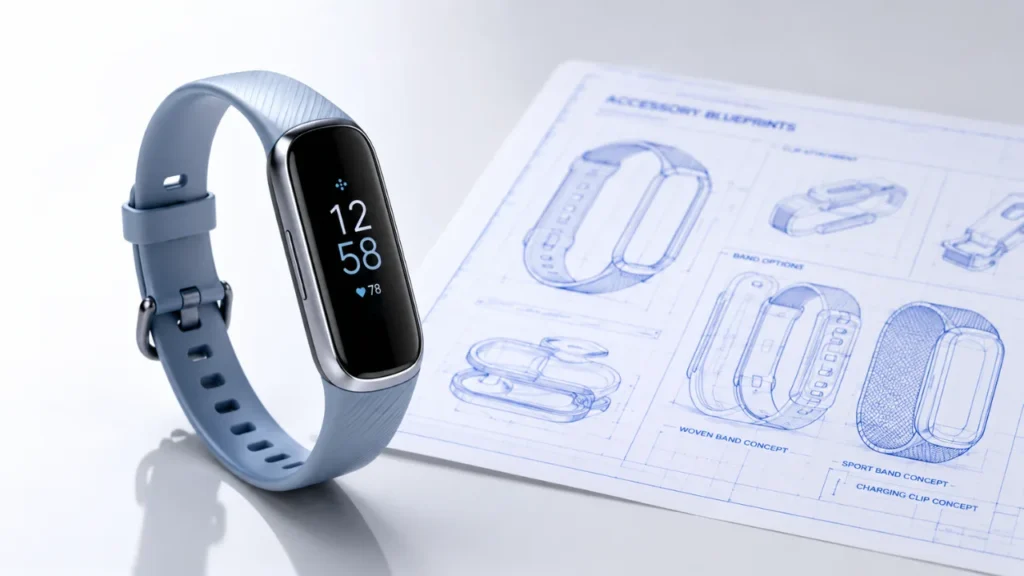
The company has publicly released technical specifications and 2D CAD drawings for the Fitbit Air, providing measurements, tolerances, mating dimensions, and attachment requirements needed to create compatible accessories.
Traditionally, this type of information remains available only to approved accessory partners.
Instead, Google is opening access to independent designers and small creators who want to experiment with new ideas.
Why This Move Matters For Fitbit Air Owners
The Fitbit Air differs from many fitness trackers because of its modular design.
The tracker itself sits inside a removable “pebble” that can be inserted into different accessories and bands. That flexibility creates opportunities for a much wider accessory ecosystem than traditional wearables offer.
As a result, users may eventually see:
- Bicep bands
- Clip-on accessories
- Sports-specific mounts
- Alternative fitness straps
- Fashion-focused designs
- Custom 3D-printed holders
Google has even acknowledged that community members have already begun experimenting with alternative wearing styles beyond the standard wrist band.
What Developers Receive In The Fitbit Air Design Package
The released documentation goes far beyond basic dimensions.
Google has included technical requirements intended to help creators build accessories that remain functional while preserving sensor accuracy.
Google Pixel Watch 5 Found Underwater In Unusual Leak Ahead Of Expected Launch
Fitbit Air Blueprint Resources
| Included Information | Purpose |
| 2D CAD Drawings | Physical dimensions |
| Mating Specifications | Accessory compatibility |
| Tolerance Measurements | Proper fit and retention |
| Attachment Force Data | Secure installation |
| Material Guidelines | User safety and comfort |
| Sensor Placement Rules | Preserve tracking accuracy |
Consequently, accessory makers receive enough information to design products without reverse-engineering the hardware.
Google Releases Fitbit Air Blueprints With Strict Sensor Requirements
While Google wants creativity, it also wants accessories to maintain tracking performance.
The company specifically advises designers not to block the optical heart-rate and SpO2 sensors located on the bottom of the tracker. Furthermore, accessories should maintain consistent skin contact to ensure accurate readings during movement.
Google also recommends sustained contact pressure for optimal performance and requires accessories to follow retention specifications that keep the tracker securely attached during workouts.
These guidelines suggest the company wants third-party products to feel almost as reliable as official accessories.
Safety Standards Are A Major Part Of The Program
Google isn’t simply publishing measurements and leaving the rest to creators.
The company also released extensive material requirements aimed at reducing skin irritation and allergic reactions. According to the documentation, designers should use skin-friendly materials and follow restrictions covering certain chemicals and manufacturing practices.
Requirements include:
- Lead-free metal alloys
- Restrictions on certain chemicals
- Skin-safe material standards
- Environmental compliance requirements
These safeguards could help ensure that custom accessories maintain a level of quality closer to commercial products.
Google’s 32 Million Mosquito Release Project Could Transform Disease Control In The US
A Rare Example Of Google’s Early Hardware Philosophy Returning
One reason this announcement feels noteworthy is that it reflects an approach Google rarely uses today.
Many modern hardware companies operate highly controlled ecosystems. Accessories often require certification programs, licensing agreements, or proprietary specifications.
Google’s decision to share Fitbit Air design information publicly feels closer to the company’s earlier culture of openness and experimentation.
Rather than controlling every accessory, Google appears willing to let the community help shape the Fitbit Air platform.
That strategy could generate ideas the company never would have developed internally.
What This Means For Fitbit Air’s Future
The success of the initiative will depend on how quickly creators embrace it.
If independent designers begin producing innovative accessories, Fitbit Air could develop one of the most diverse wearable ecosystems outside of major smartwatch platforms.
Additionally, the wearable’s screen-free design already positions it as a competitor to products such as Whoop, which focus heavily on health tracking rather than smartwatch functionality. A thriving accessory ecosystem could strengthen that position even further.
For consumers, more accessory choices usually mean greater customization and potentially lower prices.
Final Thoughts
The fact that Google Releases Fitbit Air Blueprints may seem like a small hardware story at first glance. However, it reflects a larger philosophy about how products can evolve when companies invite communities into the design process.
By providing CAD drawings, technical specifications, and safety guidelines, Google is effectively turning Fitbit Air into a platform that anyone can build around. Whether that leads to innovative fitness accessories, creative fashion designs, or entirely new use cases remains to be seen.
What is clear, however, is that Google is betting that openness can help make Fitbit Air more versatile than a typical fitness tracker.
Gemini Spark Rolls Out To Google AI Ultra Users With Powerful New AI Agent Features
FAQs
Google wants independent designers, creators, and accessory makers to build custom Fitbit Air accessories.
The package includes CAD drawings, dimensions, tolerances, attachment specifications, and accessory design guidelines.
Yes. The released specifications are intended to help creators design and manufacture compatible accessories.
The pebble is the removable tracking module that fits into different accessory designs.
Yes. Google requires designers to protect sensor functionality, maintain secure retention, and use skin-safe materials.

Anku is a Technology News writer covering Smartphones, AI, software, gaming, laptops, iOS updates, tech trends. He focuses on creating simple, informative, and reader-friendly news in Simple English Language.